
Scaphoid Fracture Symptoms After a Fall: Signs, Diagnosis and Next Steps
Scaphoid fracture symptoms can be easy to underestimate after a fall. Pain may be felt on the thumb side of the wrist,...
 Written by
Dr Mohammad Ali
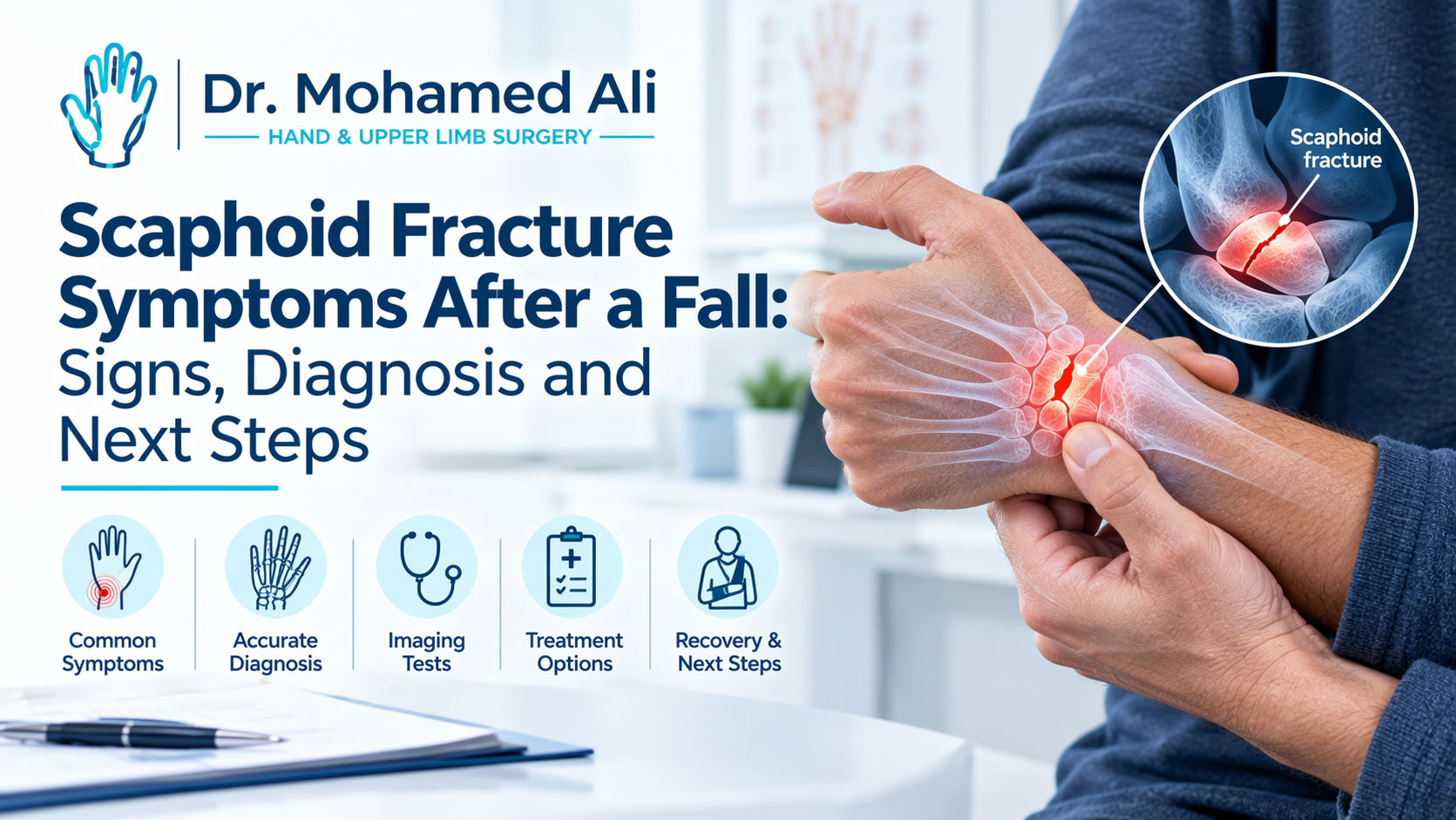
Scaphoid fracture symptoms can be easy to underestimate after a fall. Pain may be felt on the thumb side of the wrist, and some fractures are not obvious on the first X-ray. Symptoms alone cannot confirm a break, but ongoing wrist pain after an injury deserves proper assessment.
Key Takeaways
- A scaphoid fracture is a break in a small wrist bone near the base of the thumb, often after a fall onto an outstretched hand.
- Pain, tenderness, swelling, bruising or difficulty moving the wrist can occur, but symptoms vary and can overlap with a sprain or another injury.
- Some scaphoid fractures are difficult to see on an initial X-ray; a clinician may recommend further imaging or follow-up.
- Do not use a normal-looking X-ray or mild pain to rule out a fracture yourself. Seek clinical advice after a wrist injury that remains painful.
What is the scaphoid bone?
The scaphoid is one of the small carpal bones that make up the wrist. It sits near the base of the thumb and helps connect the two rows of wrist bones. A fracture can happen when force travels through the wrist, commonly when someone falls and lands on an outstretched hand.[1]
The break may be described by its location in the bone, such as the distal pole, waist or proximal pole. A clinician may also describe it as displaced or non-displaced. These details matter because they can affect healing and treatment decisions.[2]
Common scaphoid fracture symptoms
Possible symptoms after a wrist injury include:
- Pain around the wrist, often toward the thumb side.
- Tenderness when the area is touched.
- Swelling or bruising around the wrist.
- Pain or difficulty when moving the wrist or using the hand.
- In some injuries, visible deformity or a bump.
Not everyone has every symptom, and the level of pain does not reliably show how serious an injury is. A sprain and other wrist injuries can cause similar symptoms. A symptom list cannot tell you whether the scaphoid is broken or which part of the wrist is injured.[1]
Because the scaphoid is near the base of the thumb, pain in that area after a fall should not be dismissed simply because you can still move your fingers. If wrist pain persists, worsens, or makes ordinary use difficult, arrange an assessment rather than trying to diagnose it at home.
Can an X-ray miss a scaphoid fracture?
Some scaphoid fractures may not be clearly visible on the first X-ray. These are sometimes called occult fractures. If the examination and injury history still raise concern, a clinician may recommend additional imaging, such as an MRI or CT scan, or arrange follow-up imaging. The next step depends on the individual findings; a single image should be interpreted by a qualified clinician.[1]
Until you have been assessed, avoid putting unnecessary strain through an injured wrist. Follow the advice given by a healthcare professional, including any instructions about support, activity or follow-up.
How is a scaphoid fracture assessed?
A clinician will ask how the injury happened and examine the wrist and hand. Imaging may include X-rays, with MRI or CT considered when needed. The aim is to identify whether a fracture is present, where it is, whether the bone fragments have moved, and whether there are other injuries.[1]
Tell the clinician when the pain started, how it has changed, and whether you have noticed swelling, bruising, reduced movement or difficulty using the hand. Bring any previous imaging or reports if available.
How is a scaphoid fracture treated?
Treatment is not the same for every fracture. The fracture’s location, alignment, time since injury and a person’s overall health can all affect the plan. Depending on these findings, care may involve immobilization in a cast or splint, further monitoring, or surgery to realign and stabilize the bone. Your clinician will explain which options fit your case and why.[2]
Healing can take time and should be monitored as advised. Do not stop using a cast or splint, return to sport, or increase wrist loading earlier than your treating clinician recommends. If pain is not improving or symptoms change, ask whether you need reassessment.
For more information about the hand and wrist procedures available at the clinic, see Dr. Mohamed Ali’s surgical procedures. A consultation is needed to discuss an individual injury and treatment plan.
When should you seek medical care?
After a fall or direct injury, seek medical assessment if wrist pain or tenderness persists, swelling develops, or using the hand becomes difficult. If you think a bone may be broken, seek urgent medical care and avoid moving or using the wrist while waiting for advice. For a major accident, contact local emergency services.[1]
Do not wait for severe pain before asking for advice. A clinician can assess the injury and decide whether imaging or follow-up is needed.
Frequently asked questions
Can you move your wrist with a scaphoid fracture?
Movement varies. Some people can still move the wrist, while others have pain or difficulty moving it. Being able to move the wrist does not rule out a fracture.
Does every scaphoid fracture need surgery?
No. Treatment depends on the fracture’s location and alignment, among other factors. Some fractures are treated with immobilization; others may need surgery. An examination and imaging help guide that decision.[2]
What if my first X-ray is normal but my wrist still hurts?
Contact the clinician who assessed you and explain that the pain continues. Some fractures may not be obvious on an initial X-ray, and the clinician can decide whether further imaging, support or follow-up is appropriate.[1]
How long does a scaphoid fracture take to heal?
There is no single timeline for every fracture. Healing depends on factors such as the fracture’s location, alignment and treatment. Your clinician will advise when follow-up imaging and a gradual return to activity are appropriate.[2]
Discuss a wrist injury with a hand and wrist specialist
If wrist pain continues after a fall, an assessment can help clarify what may be causing it and whether further imaging is needed. Dr. Mohamed Ali offers hand, wrist and elbow consultations in Dubai, UAE. He is fellowship-trained and DHA licensed, as described on the clinic’s surgical procedures page. Use the appointment form to request a consultation.
This article is for general information and is not a diagnosis or a substitute for medical advice. Seek individual assessment for a wrist injury.
References
- Cleveland Clinic. Scaphoid Fracture: Types, Symptoms, Causes & Treatment. Medically reviewed; updated August 31, 2026.
- American Academy of Orthopaedic Surgeons (AAOS), OrthoInfo. Scaphoid Fracture of the Wrist.