What Is Tendon Transfer Surgery?
A tendon transfer changes where a functioning tendon attaches so that an intact muscle can produce a movement that has been permanently lost.
Functioning Tendon
The donor tendon retains its muscular attachment and blood supply. Only its distal insertion is changed.
Transfer Path
The functioning tendon is redirected through a carefully selected line of pull and attached at a new insertion point.
Restored Movement
The transferred muscle drives a movement that its donor function previously could not provide.
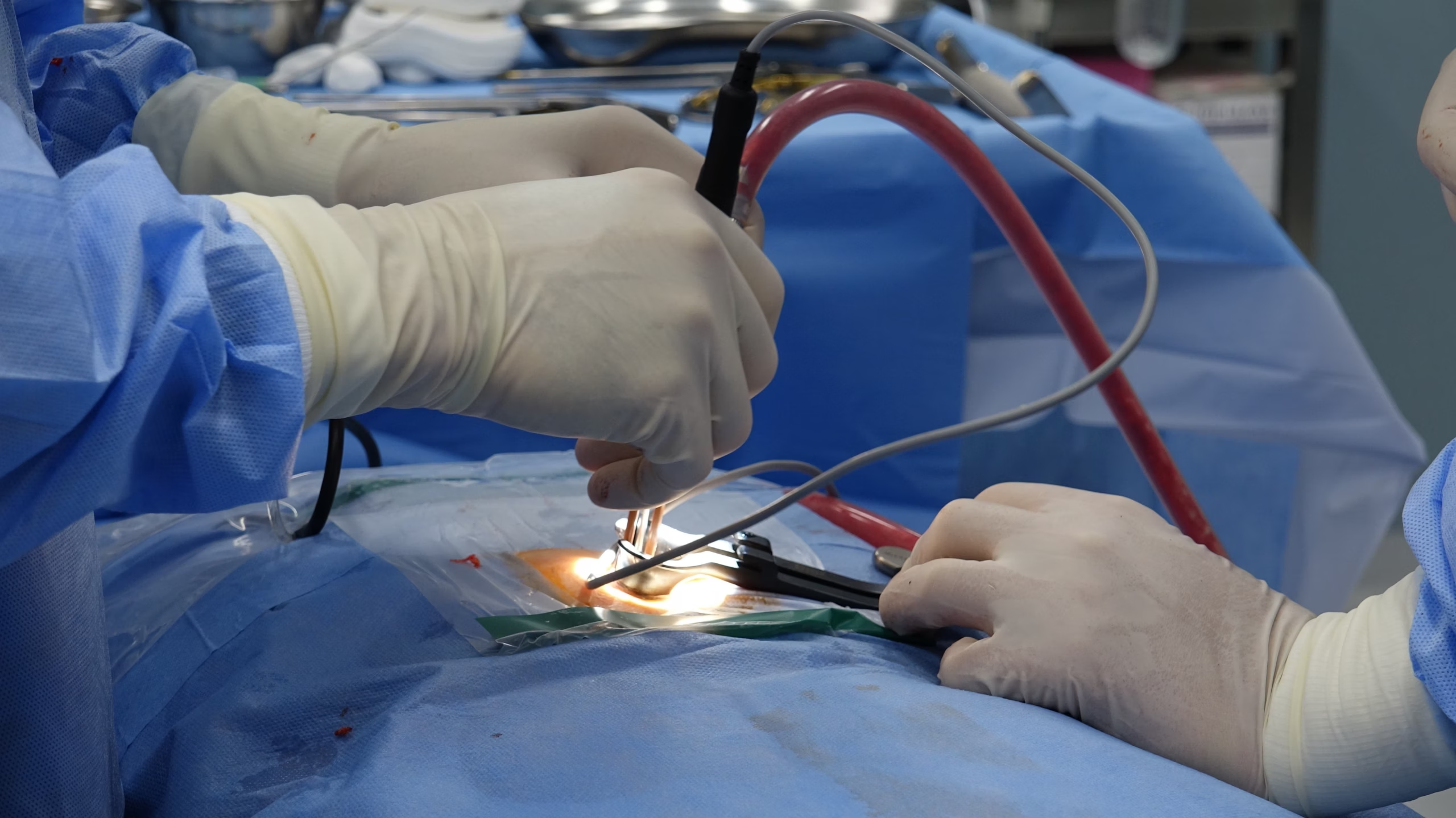
Repair reconnects a divided tendon. Transfer gives an intact tendon a new job.
A tendon transfer is fundamentally different from tendon repair, which re-unites a divided tendon end to end. Dr. Ali's fellowship training in tendon transfer surgery Dubai covers all nerve palsy patterns and the full range of donor tendon options available in the upper limb, including synergistic and non-synergistic transfers.
Mechanics, tensioning and rehabilitation determine the final function.
Tendon transfer surgery is one of the most intellectually demanding operations in hand surgery because it requires understanding of three-dimensional mechanics, donor selection, transfer tensioning and the motor re-education programme completed after surgery.
Seek assessment when movement is not returning as expected.
Early specialist review helps determine whether nerve recovery is still possible, whether a tendon is irreparable and when transfer planning should begin.
You have wrist drop or cannot extend your fingers or thumb after a nerve injury or trauma.
You cannot oppose your thumb to your fingertips.
Finger clawing from ulnar nerve palsy is limiting function.
A tendon has been considered irreparable.
Nerve recovery is not progressing as expected more than 6 months after injury.
You have been told that tendon transfer may be needed.
Who Needs Tendon Transfer Surgery in Dubai?
Tendon transfer surgery is indicated when movement has been lost and cannot be restored by direct repair or nerve recovery alone. Dr. Ali confirms donor eligibility and transfer planning at the first consultation.
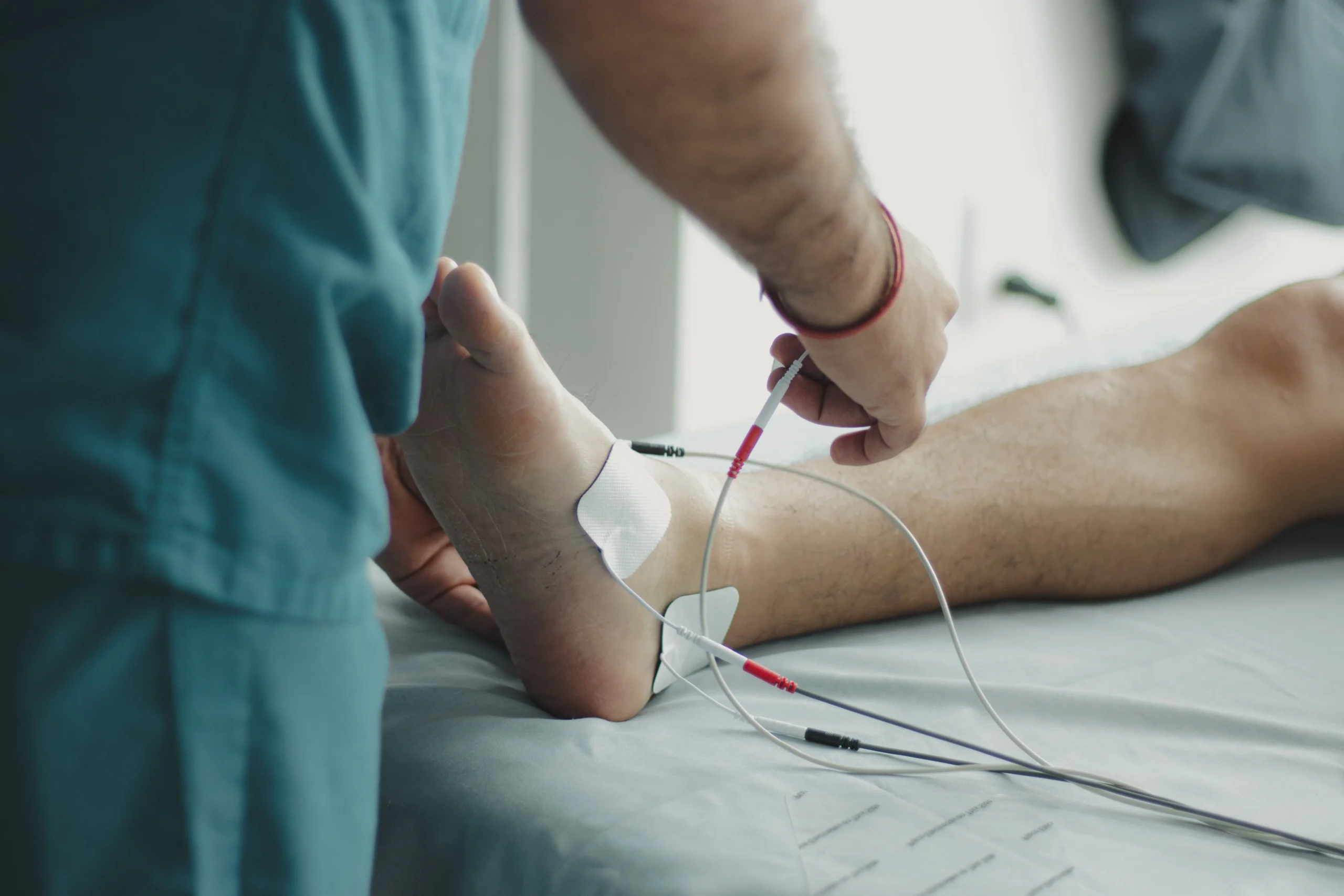
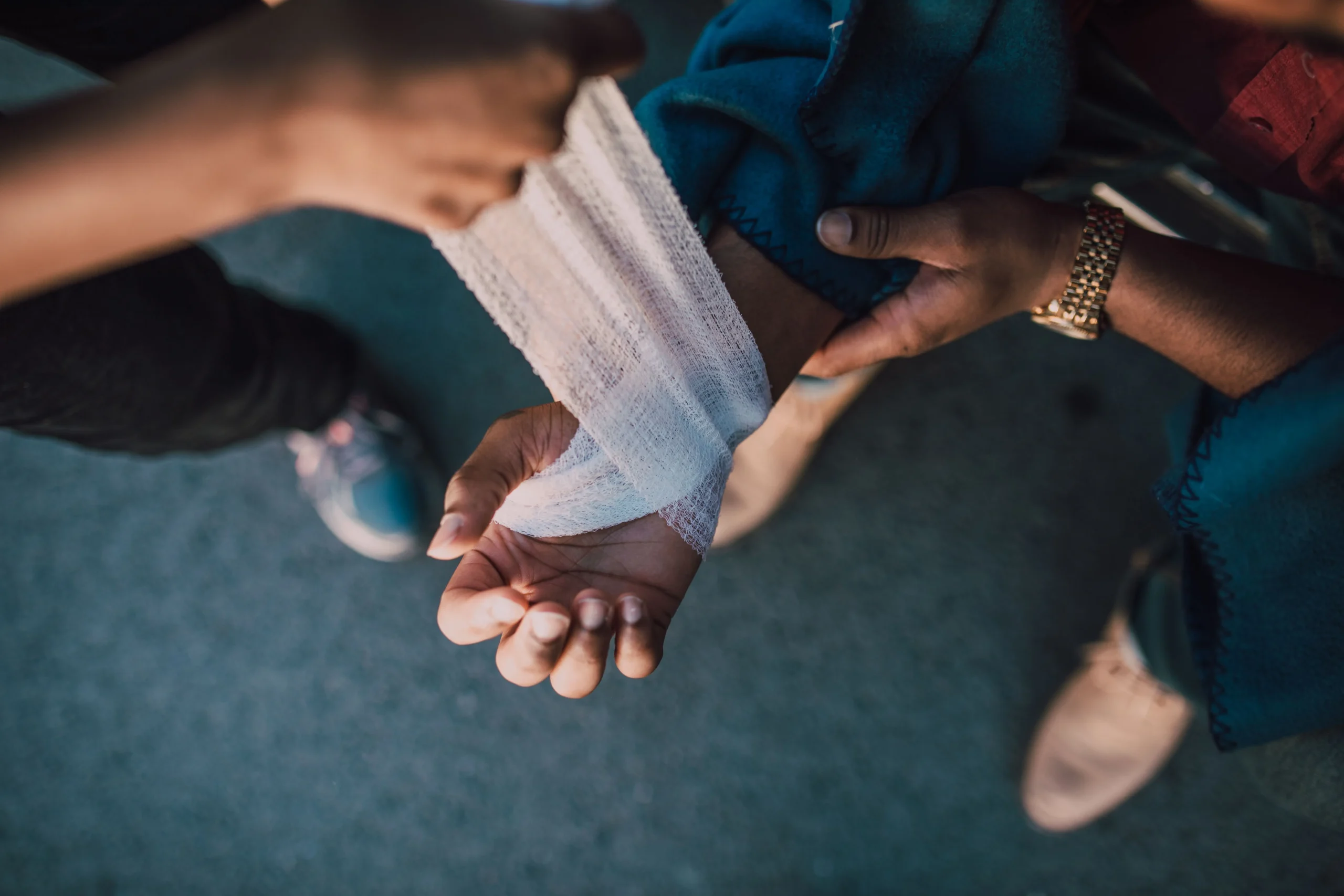

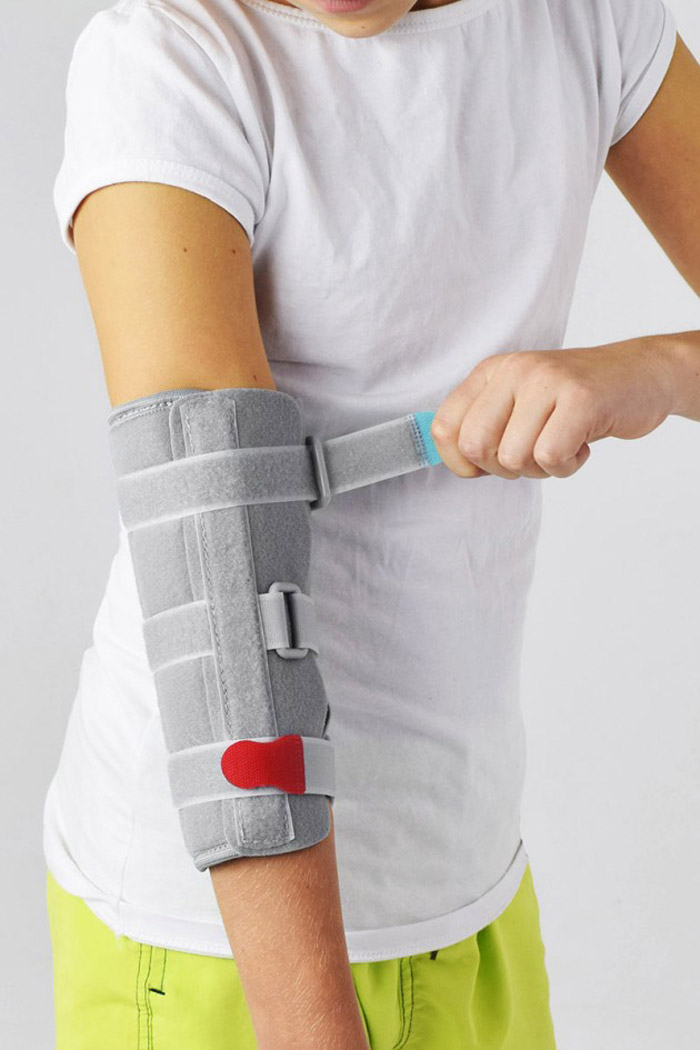

When a tendon has retracted beyond the repair zone, been destroyed by infection or devascularisation, or lost its muscle due to prolonged denervation atrophy, direct repair is not possible. A tendon transfer provides the reconstructive solution. This includes rheumatoid extensor rupture, occupational degloving injuries and tendon loss after complex trauma.
Radial nerve injury causes loss of wrist extension, finger extension and thumb extension. When recovery is not expected within 12 to 18 months, intact flexor compartment donors can restore these functions.
Opponensplasty using the ring finger FDS, abductor digiti minimi or extensor indicis proprius restores thumb opposition when median nerve recovery is not expected.
Intrinsic reconstruction using the FDS tendons corrects ring and little finger clawing and restores intrinsic function. Precision of Pulvertaft weave tensioning and motor re-education are equally important.
When nerve repair has not produced functional motor recovery at 12 to 18 months, tendon transfer can secure function without waiting for regeneration that is unlikely to occur. Nerve transfer may be considered simultaneously in selected cases.
Four conditions that determine whether a transfer can succeed.
Complications if Tendon Transfer Candidacy Is Left Unaddressed
Progressive Joint Contracture
A paralysed hand or wrist develops fixed contractures from unopposed tendons and gravity. Established contractures must be released before transfer, converting a simpler case into staged reconstruction.
Irreversible Muscle Atrophy
Denervated muscles that atrophy to less than 20 to 30 percent of their original mass will not recover function even after successful nerve repair. Intact donor tendons protect function from this irreversibility.
Occupational and Social Disability
Wrist drop, absent thumb opposition and intrinsic minus clawing affect work, driving, self-care and social participation. Compensatory patterns become harder to override during later motor re-education.
Closing Transfer Window
The optimal time relative to nerve injury is within 12 to 18 months. Beyond this period, motor re-education becomes less effective because entrenched compensatory movements are harder to override.
Book early assessment ↗
Early planning preserves joint mobility, donor options and the best conditions for motor re-education.
Donor Tendon Selection for Tendon Transfer Surgery in Dubai
The donor tendon must provide enough power and excursion without creating an unacceptable deficit at its original function.
Expendability
The donor must be one whose sacrifice does not produce a clinically significant deficit. In radial nerve palsy, intact flexor tendons can be used because finger and wrist flexion remains supported by other muscles.
Straight Line of Pull
A curved route reduces force transmission and effective excursion. Routing through the interosseous membrane or around the radial wrist is planned precisely.
Adequate Excursion
Wrist extensors have approximately 33mm of excursion, finger extensors 50mm and finger flexors 70mm. Mismatch may cause incomplete movement or fixed posturing.
Synergistic Function
Transfers work best when donor and recipient normally activate together. Synergistic donors require less motor re-education than non-synergistic transfers.
Candidacy requires supple joints, adequate donor power and a route that delivers movement through the straightest possible line of pull.
Request transfer assessment →Common Tendon Transfer Procedures Performed in Dubai
Each procedure is selected according to the movement that has been lost, the available donor tendon and the reconstruction needed to restore function.
01
Radial Nerve Palsy Transfer
Three simultaneous transfers restore wrist, finger and thumb extension: pronator teres to ECRB, flexor carpi ulnaris to extensor digitorum communis, and palmaris longus to extensor pollicis longus.
 02
02
Opponensplasty
Thumb opposition is restored by rerouting a donor tendon to reproduce the pull of the paralysed thenar muscles. Ring finger FDS is commonly routed through a pulley at the pisiform; EIP or abductor digiti minimi are alternative donors.
03
Intrinsic Reconstruction
The Brand transfer uses split FDS slips directed to the lateral bands to correct MCP hyperextension and restore intrinsic balance. Lateral pinch may be restored with EIP transfer to adductor pollicis.
 04
04
Rheumatoid Extensor Tendon Rupture
Tendon transfer is preferred over primary repair when tendon quality is poor. End-to-side suture to an adjacent intact extensor or brachioradialis transfer can restore extension, with synovectomy to reduce recurrence.
Tendon Transfer Surgery: Step by Step
Each stage protects donor excursion, creates the straightest line of pull and sets the transfer at the correct tension.
Anaesthesia
General anaesthesia or a regional nerve block is used. WALANT is selected in some cases to confirm transfer tension while the patient actively demonstrates movement.
Donor Tendon Harvest
The tendon is detached at its insertion while preserving maximum length, then freed proximally to ensure adequate excursion in its new role.
Routing the Transfer
The donor passes through subcutaneous tissue, around a pulley or through the interosseous membrane to reach the recipient through the straightest possible route.
Tensioning
The donor is joined using a Pulvertaft weave. Too tight creates fixed posture; too loose creates insufficient movement. Joint position and tenodesis are used to confirm the balance.
Fixation
The weave is secured with multiple interrupted sutures to tolerate controlled mobilisation after the planned immobilisation period.
Wound Closure and Splinting
Wounds are closed in layers and a transfer-specific plaster splint protects the tendon in a relaxed position. Therapy instructions are provided before discharge.
Tendon Transfer Surgery Recovery Timeline in Dubai
Recovery is unique because the brain must learn to activate the transferred muscle in a completely new role. Therapy is as important as the operation.
Protect the Transfer
Protective splint immobilisation, elevation, wound review at 2 weeks and passive movement of joints not immobilised by the splint.
Begin Motor Re-education
The splint is removed and the patient learns to activate the original donor muscle to create movement at the new recipient site.
Build Automatic Movement
Active movement becomes more automatic. Strengthening, grip and pinch exercises begin once the movement pattern is established.
Return to Function
Return to manual work, driving and sport progresses while the motor pattern continues to consolidate and becomes increasingly automatic.
Most patients achieve meaningful use of the transferred tendon by 8 to 10 weeks.
Final functional assessment at 6 months documents the outcome and identifies any residual deficit that may require further intervention.
“The fracture finally healed after revision fixation with bone grafting.”
tendon transfer, particularly Zone II flexor tendon transfer, is technically demanding and the outcome depends on both surgical precision and the quality of the post-operative rehabilitation programme.
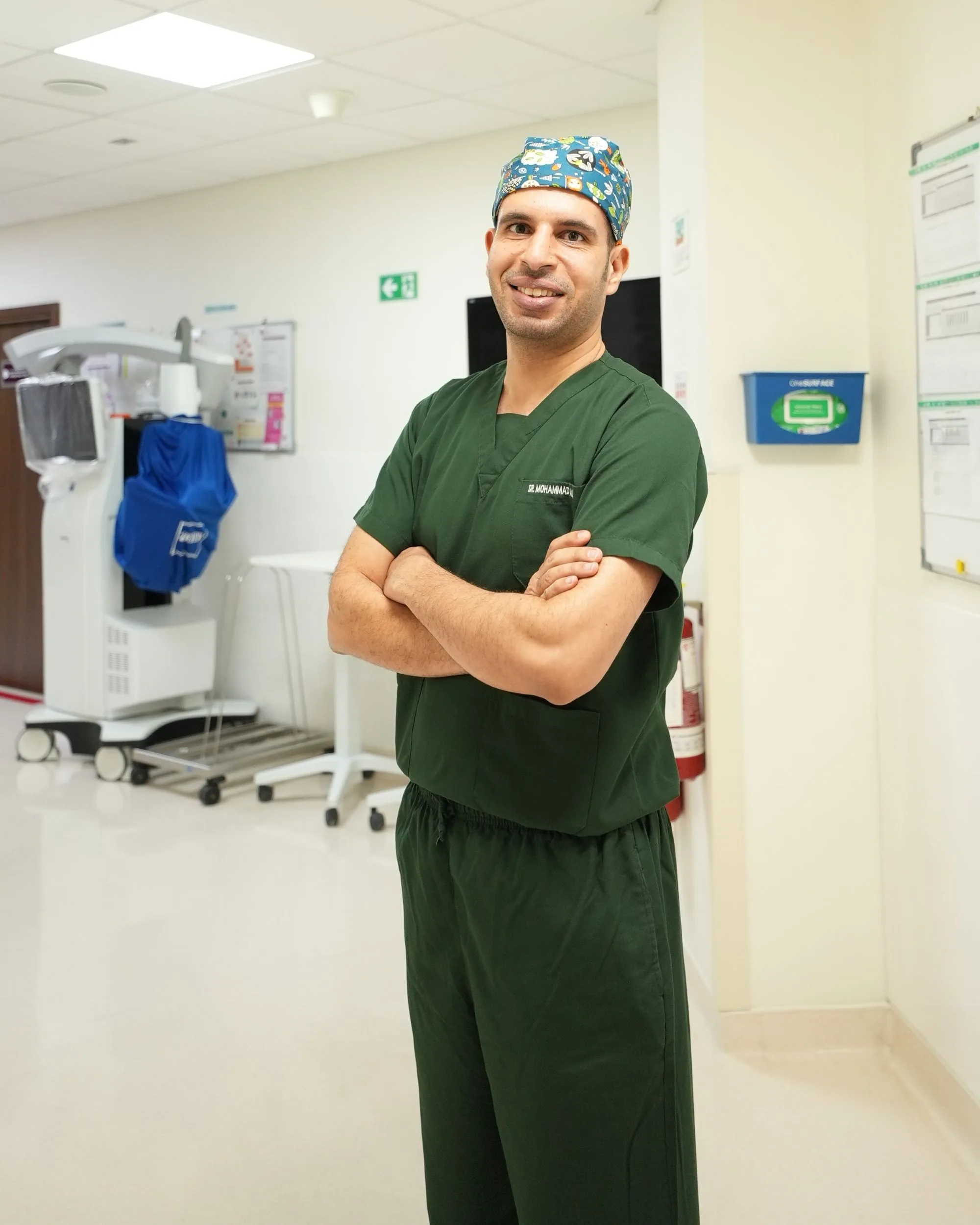
Specialist Tendon Transfer across flexor and extensor zones, including technically demanding Zone II injuries.
Book a ConsultationDr. Ali's fellowship training included all zones of flexor and extensor tendon repair, including the technically demanding Zone II injuries within the fibrous sheath that require subspecialty expertise.
Dr. Ali uses four-strand and six-strand core suture configurations that provide the repair strength required for controlled early mobilisation. Stronger repairs allow earlier movement and produce less adhesion.
All surgical procedures are performed at DHA-regulated facilities in Dubai, ensuring regulatory compliance and access to the microsurgery equipment and tourniquet control required for tendon transfer .
Every tendon transfer patient at dubaihand.com receives a referral to a specialist hand physiotherapist on the day of surgery. The rehabilitation programme is coordinated directly with the physiotherapy team to match the exact repair technique and repair strength achieved.
You can book a tendon transfer surgery consultation directly at dubaihand.com without a GP or specialist referral. For acute injuries, contact the clinic urgently. Available everyday, 9 AM to 5 PM, Dubai, UAE.
Call +971 50 254 4263Wrist Drop, Clawing or Lost Thumb Opposition? Book a Specialist Assessment in Dubai.
Book a consultation with Dr. Mohamed Ali in Dubai. He will assess the nerve palsy or tendon deficit, confirm whether the prerequisites for transfer are met and provide a specific surgical plan for restoring your hand function. No referral required.