
Scapholunate Ligament Repairin Dubai
Precise diagnosis. The right treatment for your wrist.
From a recent ligament injury to long-standing wrist instability, Dr. Mohamed Ali provides individualised assessment, repair and reconstruction options.
One small ligament.
A vital connection.
What Is a Scapholunate Ligament Injury?
The scapholunate ligament is the primary interosseous ligament connecting the scaphoid and lunate bones of your wrist. It helps these small bones move together, preserving the alignment needed for grip, lifting and everyday wrist motion.
When the ligament tears, those bones can rotate abnormally, creating instability, pain and clicking. If that relationship remains disturbed over time, the wrist may progress toward the arthritis pattern known as SLAC wrist.



Alignment
The ligament stabilises how the scaphoid and lunate move together.
Instability
Once torn, clicking, pain and weakness may appear with use.
Assessment
Examination and imaging help define the stage of the injury.
Timing
Earlier diagnosis may preserve more reconstructive options.
It often begins
with something subtle.
A painful click, a weak grip or a wrist that never felt right after a fall. The symptoms and injury mechanisms can provide important diagnostic clues.

Fall on an
outstretched hand
Forced wrist extension or twisting can damage the SL ligament, ranging from a partial tear to complete rupture.
Perilunate dislocation
High-energy injuries may disrupt carpal alignment and require urgent specialist assessment and reduction.
HIGH-ENERGY TRAUMA ↗Chronic degeneration
Repetitive loading during manual work, sport or weightlifting can contribute to progressive ligament symptoms.
REPETITIVE LOAD ↗Following a wrist fracture
Persistent dorsal wrist pain after an apparently healed distal radius fracture can indicate an associated SL injury.
PERSISTENT PAIN ↗The cost
of waiting.
Untreated scapholunate instability can change the way the wrist distributes force. Not every tear progresses, but persistent instability warrants careful assessment.
Progressive carpal collapse
The scaphoid may rotate into flexion while the lunate extends. The scapholunate gap and the relationship between the carpal bones can become abnormal.
SLAC wrist arthritis
Persistent abnormal mechanics can contribute to wear at the radioscaphoid and then midcarpal joints. Established cartilage loss changes the available treatment options.
Grip weakness & pain
Chronic pain, instability and stiffness may reduce force through the wrist, making everyday tasks, work and sport more difficult.
Salvage surgery options
When arthritis is established, procedures such as proximal row carpectomy or partial wrist fusion may be considered instead of restoring the original ligament.
Find the cause.
Choose the right path.
The wrist can appear deceptively normal after injury. Proper diagnosis combines symptoms, specialist examination and the right imaging pathway.

Clinical examination
Watson's scaphoid shift test helps assess painful shifting or a clunk as the wrist moves. Tenderness, grip and comparison with the opposite wrist are also important.
Stress X-rays
Grip views and comparison with the opposite wrist help evaluate the scapholunate gap, carpal alignment and associated bony injury.
MRI / MR arthrogram
Advanced imaging can assess ligament continuity, associated soft tissue pathology and cartilage or bone changes.
Diagnostic wrist arthroscopy
When indicated, direct visualisation allows precise assessment of the ligament and cartilage and supports treatment decisions.
No two wrist tears
follow the same path.
Scapholunate instability is assessed according to ligament quality, reducibility, alignment and cartilage condition. Select an injury stage to explore possible approaches.
Conservative care first.
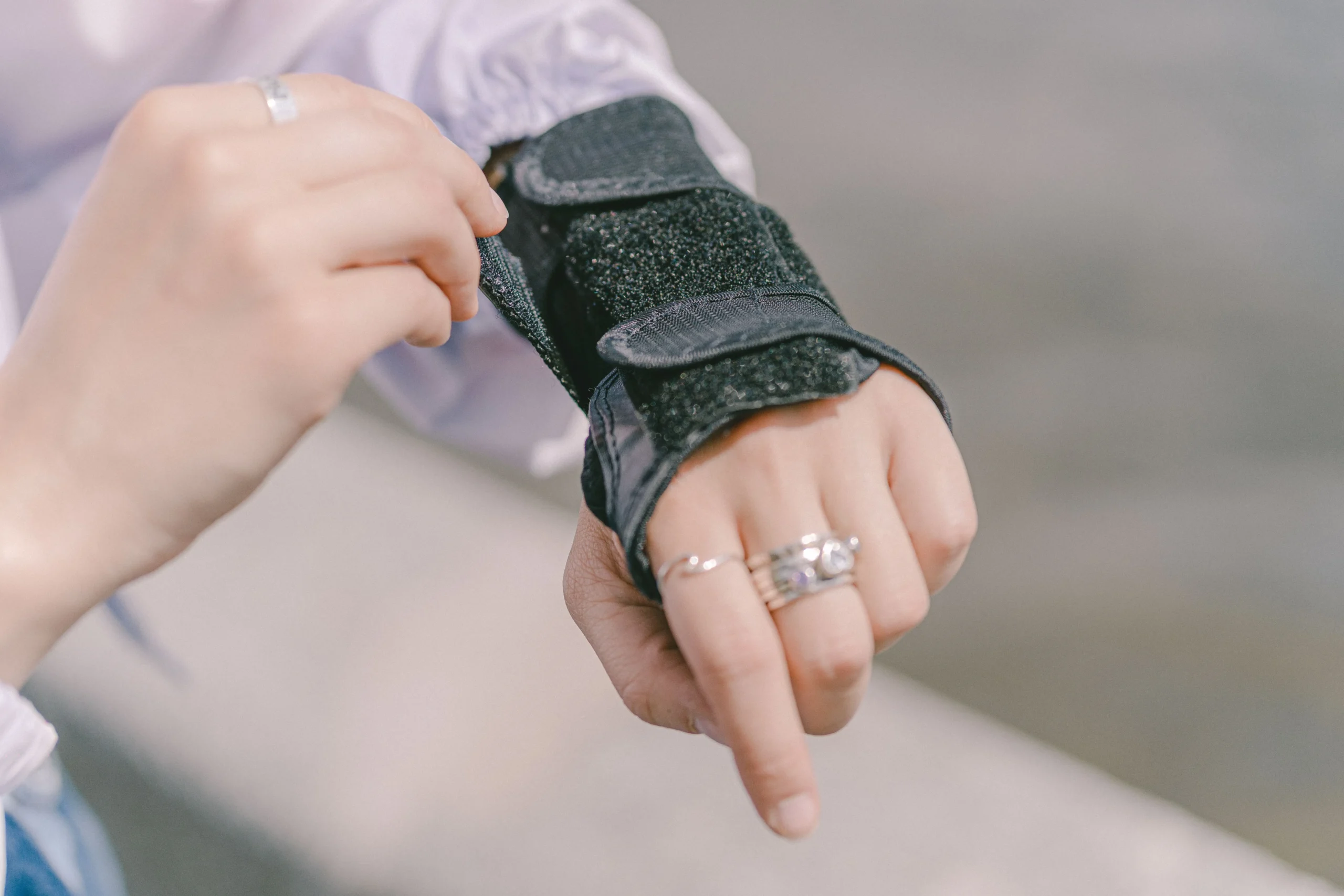
For a partial tear with a stable wrist, a splint, activity modification and specialist hand therapy may be appropriate. Selected persistent cases may need arthroscopic assessment.
Classification is a clinical framework, not a self-diagnosis. Definitive treatment is individualised after examination and review of imaging.
Different injuries.
Different solutions.
Arthroscopic debridement & stabilisation
For selected lower-grade tears, arthroscopy allows direct visualisation, removal of damaged tissue and treatment tailored to ligament stability.
LESS INVASIVE ASSESSMENTOpen repair & capsulodesis
Suture anchors may reattach a repairable ligament. Dorsal capsulodesis and temporary K-wire fixation can provide additional protection during healing.
REPAIRABLE TISSUE
Tendon graft reconstruction
When direct repair is no longer appropriate, procedures including a Modified Brunelli reconstruction can recreate stabilising structures using tendon tissue.
RECONSTRUCTIVE OPTIONProximal row carpectomy
In carefully selected arthritic wrists, removal of the proximal row of carpal bones may reduce pain while preserving some wrist movement.
JOINT-PRESERVING MOVEMENTFour-corner / wrist fusion
For more advanced cartilage changes, partial or total fusion may be considered to address pain and instability. The choice depends on the remaining joint surfaces.
ADVANCED RECONSTRUCTIONPre-operative consultation
Review symptoms, MRI findings, treatment options, consent and your rehabilitation plan.
Imaging review
Review wrist X-rays, stress images and MRI or MR arthrogram; refine the planned surgical technique.
Medical clearance
Complete any blood tests, ECG or anaesthetic assessment requested for the planned facility and procedure.
Medication instructions
Discuss all prescription and non-prescription medicines, especially anticoagulants and anti-inflammatory medicines. Do not stop prescribed medication without the treating clinician's instructions.
Fasting before anaesthesia
Follow the anaesthetic team's specific instructions for food and clear liquids, which depend on the procedure and medical history.
Plan your recovery
Arrange transport after surgery, help at home where necessary and appointments for follow-up and hand therapy.
Anaesthesia & positioning
Regional anaesthesia or general anaesthesia is administered. The arm is prepared and a tourniquet may be used.
Diagnostic wrist arthroscopy
The ligament, carpal alignment and cartilage condition are assessed under direct vision and graded as appropriate.
Repair or reconstruction
A repairable tear may be reattached with suture anchors; an irreparable ligament may require tendon graft reconstruction and capsulodesis.
Temporary fixation
K-wires may hold the carpal bones aligned while healing takes place, with imaging to verify position.
Closure & protection
The wound is closed and an appropriate protective cast or splint is applied.
Recovery & follow-up
Post-operative instructions, pain control and planned appointments guide the early healing period.
Recovery is
a progression.
Each stage protects healing tissue while movement and strength return gradually. Timings vary by procedure and individual recovery.
Protect the repair.
A cast or splint protects the wrist, sometimes with temporary K-wires. Fingers, elbow and shoulder are kept moving as advised, while wound and X-ray reviews monitor healing.
Your surgeon and hand therapist will adjust the programme to your operation, tissue healing and goals.
Clear expectations.
Confident decisions.
Any operation has benefits and possible complications. Your consultation is an opportunity to discuss the risks that apply to your specific injury and treatment.
Residual instability
Some patients experience ongoing laxity or symptoms despite repair or reconstruction; revision procedures may occasionally be needed.
Wrist stiffness
Loss of movement can occur after both immobilisation and surgery. Guided hand therapy is an important part of recovery.
K-wire complications
Temporary fixation carries possible risks such as pin-site irritation, infection or wire movement.
Arthritic progression
Especially in chronic instability, degenerative changes can continue despite treatment and may require further management.
Expertise built
around one purpose.
Why Choose Dr. Mohamed Ali?
Complex carpal instability requires detailed assessment and a treatment plan that suits the condition of your ligament, your cartilage and your lifestyle.

Specialist wrist care,
within reach.
Consultations in Dubai for patients from Dubai, Abu Dhabi, Sharjah and across the UAE. No GP referral is required to request an appointment.
Questions,
answered clearly.
Helpful information for patients considering assessment or treatment of scapholunate ligament injury.
What is a scapholunate ligament tear?
How long does recovery take?
Can a ligament tear heal without surgery?
What is SLAC wrist?
What is the Watson test?
Do I need a referral to see Dr. Mohamed Ali?
Let's restore confidence
in your wrist.
Book your scapholunate ligament assessment with Dr. Mohamed Ali in Dubai. Discuss your symptoms, review available imaging and explore the treatment options suited to your injury.