
Broken Hand Surgery: Fixation Options, Recovery & Care Guide
Broken Hand Surgery: Complete Guide to Procedures, Fixation, and Recovery Written by Dr. Mohammad Ali, Fellowship-Trained Hand, Wrist and Upper Limb Surgeon...
 Written by
Dr Mohammad Ali
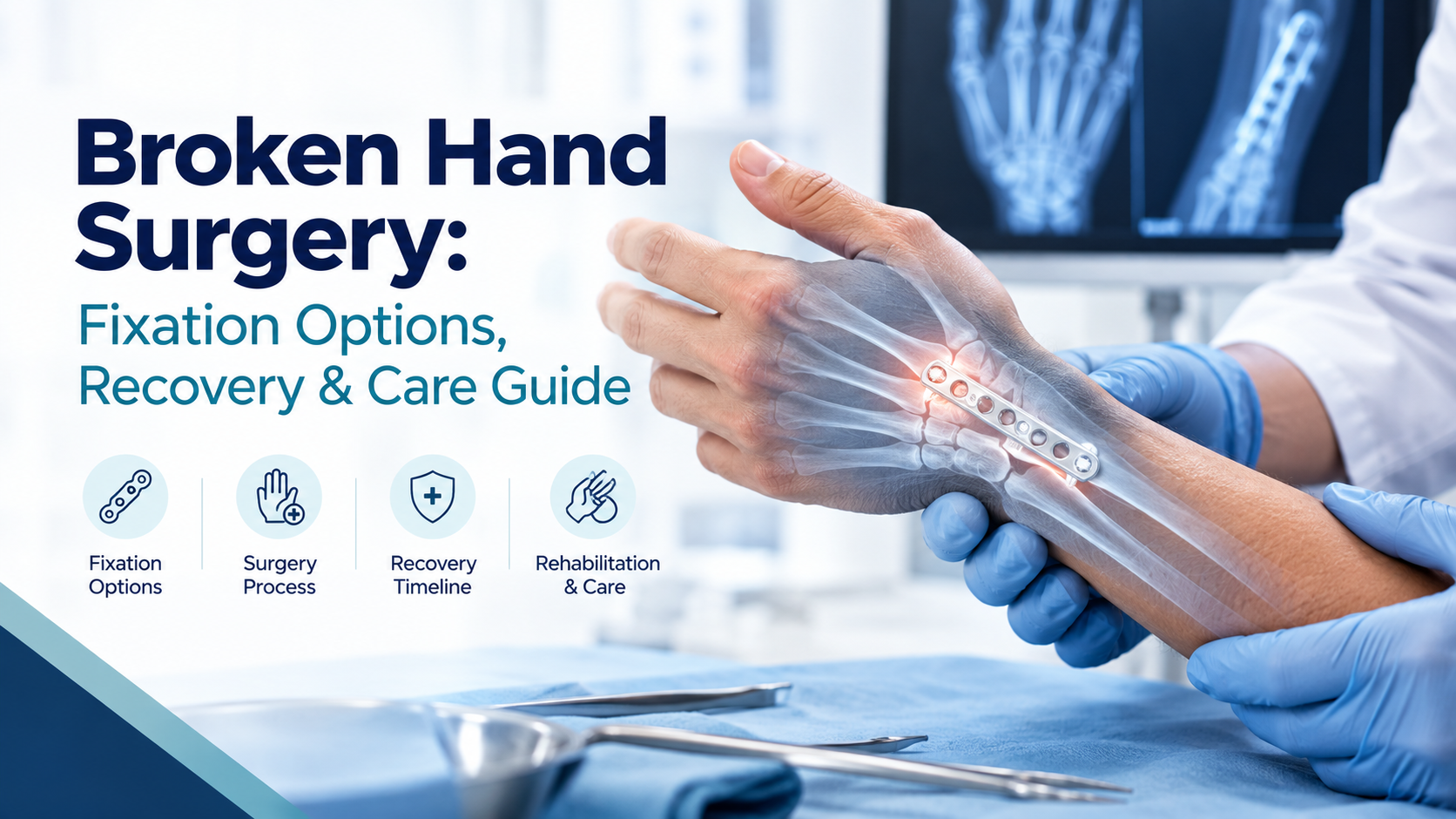
Broken Hand Surgery: Complete Guide to Procedures, Fixation, and Recovery
Written by Dr. Mohammad Ali, Fellowship-Trained Hand, Wrist and Upper Limb Surgeon at Dubai Hand, providing specialized orthopedic and reconstructive extremity care in Dubai, UAE.
Facing broken hand surgery can feel overwhelming, especially when finger mobility and grip strength are at risk. An accurate anatomical alignment ensures you regain full hand function without long-term stiffness. This clinical guide breaks down surgical indications, modern fixation hardware, realistic recovery timelines, and therapy protocols so you can make informed choices about your treatment.
Understanding Hand Fractures: Anatomy and Common Break Patterns
The human hand contains 27 bones, including 8 carpal bones in the wrist, 5 metacarpals in the palm, and 14 phalanges across the fingers and thumb.
Because the hand operates via an intricate balance of extrinsic tendons, intrinsic muscles, and joint capsules, even minor bony displacement can cause severe functional limitations.
Hand fractures typically fall into specific anatomical categories based on the mechanism of injury:
- Metacarpal Neck Fractures (Boxer’s Fracture): Occurs at the neck of the fifth metacarpal following direct impact. While minor angulation can heal in a splint, severe palmar tilt requires surgical pin or screw stabilization.
- Metacarpal Shaft Fractures: Breaks along the mid-shaft that frequently display rotational deformity or shortening.
- Phalangeal Fractures: Breaks in the proximal, middle, or distal finger bones that can lead to tendon adhesions if not stabilized precisely.
- Thumb Base Fractures (Bennett and Rolando Fractures): Intra-articular fractures at the base of the first metacarpal requiring rigid anatomic reduction to preserve thumb opposition and pinch strength.
To determine if non-operative care is viable, explore our clinical overview of custom orthopedic splinting techniques for non-displaced hand injuries.
When Does a Broken Hand Require Surgery?
Not every broken hand requires an operation. Many stable, non-displaced fractures heal successfully with dedicated immobilization.
However, specific structural instability patterns mandate surgical intervention to prevent permanent disability, according to clinical guidelines from the American Academy of Orthopaedic Surgeons (AAOS).
Clinical Indications for Surgical Fixation
Orthopedic hand surgeons evaluate several radiographic and clinical parameters when deciding between conservative splinting and operative repair:
- Rotational Malalignment: Any rotational error causes fingers to cross over one another (“scissoring”) when making a fist. The human hand cannot naturally compensate for rotational malunion.
- Intra-Articular Displacement: Fractures entering a joint with greater than 1 to 2 mm of articular surface step-off dramatically increase the risk of rapid post-traumatic arthritis.
- Unacceptable Angulation or Shortening: Metacarpal shortening over 3 to 5 mm alters the intrinsic muscle tension, resulting in an extensor lag or loss of grip power.
- Multiple or Open Fractures: Multiple broken metacarpals destabilize the transverse hand arches, while open fractures present immediate infection risks requiring surgical debridement.
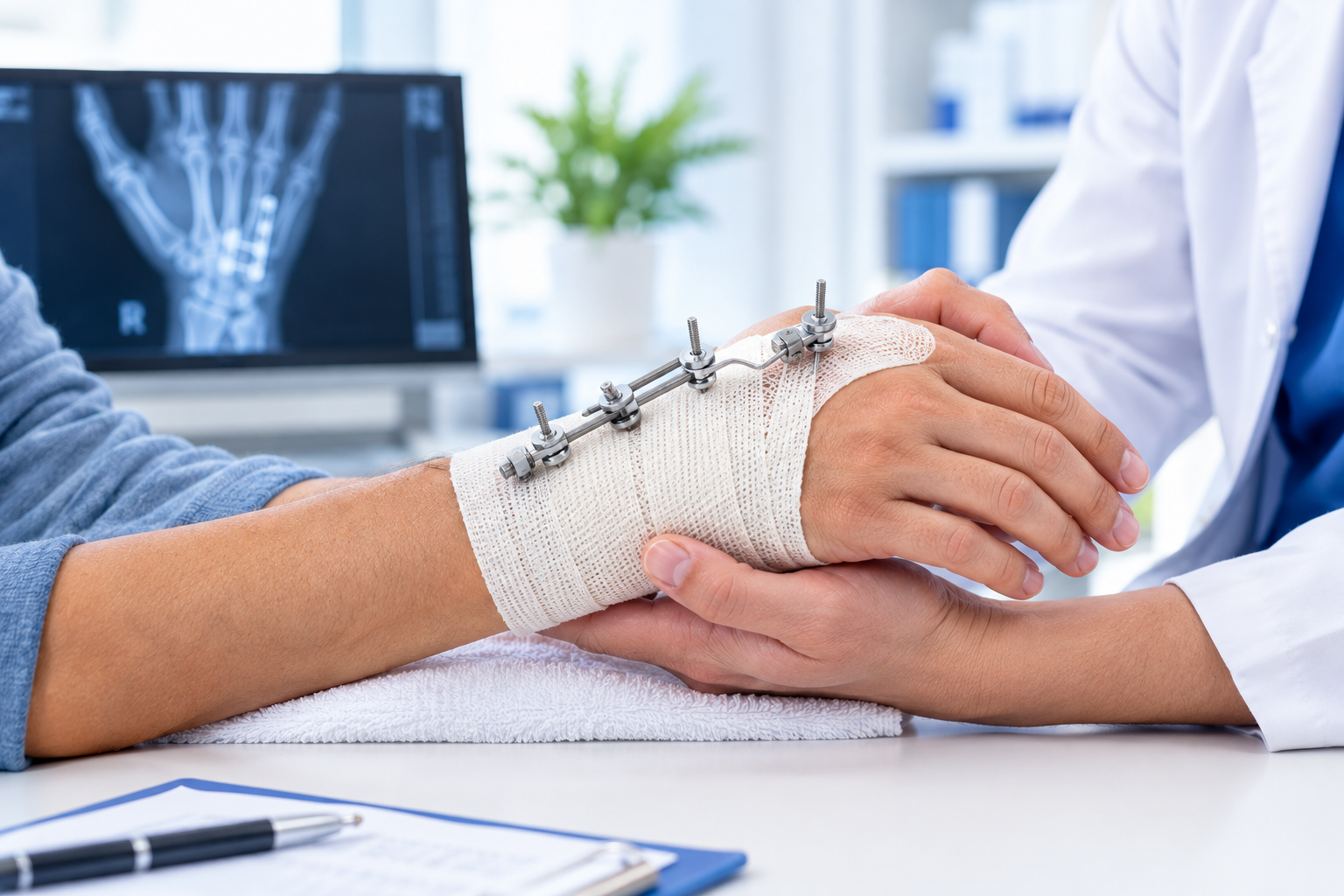
Surgical vs. Non-Surgical Treatment Comparison
| Clinical Feature | Conservative Splinting / Casting | Broken Hand Surgery (Internal / Pin Fixation) |
| Fracture Alignment | Non-displaced or stable after closed reduction | Unstable, displaced, rotated, or comminuted |
| Joint Involvement | Extra-articular or <1 mm step-off | Intra-articular displacement >1–2 mm |
| Immobilization Window | Strict immobilization for 4 to 6 weeks | Rigid fixation allows active motion in 3 to 10 days |
| Tendon Adhesion Risk | Moderate due to prolonged stiffness | Significantly lower with early mobilization protocols |
| Main Risks | Secondary displacement, malunion, joint stiffness | Surgical site infection, hardware prominence, nerve irritation |
Can a Broken Hand Heal on Its Own Without Surgery?
While bone tissue will eventually generate bridging callus even when displaced, healing in an anatomically incorrect position leads to malunion.
A malunited metacarpal or phalanx causes chronic pain, weak grip, altered biomechanics, and aesthetic deformity. When complex malunions occur, patients often require corrective realignment such as a corrective osteotomy procedure to restore hand alignment.
Modern Fixation Techniques in Broken Hand Surgery
Surgical management of hand fractures has evolved from prolonged plaster immobilization to precise, low-profile internal fixation systems that protect adjacent soft tissues.
The choice of hardware depends directly on the location, configuration, and bone quality of the fracture, as outlined in clinical literature indexed by the National Center for Biotechnology Information (NCBI Bookshelf).
Percutaneous Kirschner Wire (K-Wire) Pinning
Percutaneous pinning involves passing smooth, surgical-grade stainless steel wires across the fracture site under fluoroscopic (live X-ray) guidance.
- Minimally invasive approach that leaves surrounding periosteum and blood supply undisturbed.
- Pins remain in place for 4 to 6 weeks and are removed in an outpatient clinic room without further surgery.
- Requires external protective splinting since wires do not provide absolute rigid stability.
Open Reduction and Internal Fixation (ORIF) with Mini-Fragment Plates
ORIF utilizes pre-contoured, low-profile titanium plates (ranging from 1.3 mm to 2.0 mm) secured with locking or non-locking screws directly to the bone surface.
- Provides rigid structural stability, counteracting muscle forces on the metacarpals and phalanges.
- Enables early active finger flexion and extension within the first post-operative week.
- Titanium plates are biocompatible and designed to remain permanently beneath the deep tissues.
Intramedullary Headless Compression Screws
Cannulated headless compression screws are inserted down the central canal of the metacarpal or phalanx through micro-incisions.
Because the screw heads countersink completely beneath the cartilage surface, there is no hardware friction against gliding extensor or flexor tendons.
2026 Advances: WALANT and Minimally Invasive Hand Fixation
The surgical standard for hand trauma has shifted toward Wide Awake Local Anesthesia No Tourniquet (WALANT) techniques, thoroughly detailed by the American Society for Surgery of the Hand (ASSH).
Using a buffered combination of lidocaine and epinephrine, surgeons achieve complete local anesthesia and field hemostasis without requiring general anesthesia, an arm tourniquet, or pre-operative fasting.
WALANT allows patients to remain fully conscious and comfortably move their fingers intraoperatively.
This allows the surgeon to confirm that plates and screws do not catch on tendons and verify that rotational scissoring is eliminated before closing the skin.
If you have questions about perioperative steps, learn more about what to expect before hand and wrist surgery.
Step-by-Step: What to Expect During the Surgical Procedure
Broken hand surgery is typically performed as an outpatient day case, allowing you to return home the same day.
Surgical protocols follow a clear, systematic flow to protect soft tissues and ensure rapid recovery:
- Anesthesia Administration: You will receive WALANT local infiltration, regional axillary nerve block, or general anesthesia based on case complexity.
- Incision and Exposure: Carefully planned skin creases are used to expose the bone while gently retracting delicate digital nerves and gliding tendons.
- Fracture Reduction: The surgeon anatomically aligns the fracture fragments under direct vision and fluoroscopic X-ray verification.
- Hardware Fixation: Plates, screws, or K-wires are placed to achieve absolute rigid or biological stabilization.
- Soft Tissue Closure and Dressing: Tissues are closed with fine sutures, and a supportive postoperative splint is applied to protect the hand.
Detailed insights on soft tissue handling are outlined in our overview of specialized tendon repair techniques.
Post-Operative Recovery Timeline and Hand Rehabilitation
Bone consolidation requires biological time, but keeping joints moving is necessary to avoid post-traumatic stiffness.
Structured rehabilitation principles from specialized orthopedic literature emphasize early edema management and progressive loading protocols to optimize functional recovery.
Phased Hand Fracture Rehabilitation Milestones
| Recovery Phase | Clinical Focus | Allowed Activities & Exercises | Protection Status |
| Weeks 0 to 2 | Edema control, wound healing, pain management | Gentle active tendon gliding, uninvolved finger motion | Post-op resting splint worn continuously |
| Weeks 2 to 4 | Suture removal, scar tissue desensitization | Active range of motion (AROM), composite fist making | Removable thermoplastic custom splint |
| Weeks 4 to 6 | Early bone bridging callus formation | Gentle passive stretching, light daily activities (typing) | Splint weaning for light household tasks |
| Weeks 6 to 8 | Radiographic bone union confirmed | Progressive resistance exercises, putty squeezing | Splint discontinued for daily routines |
| Weeks 8 to 12+ | Full functional strengthening and remodeling | Heavy manual lifting, contact sports, high-impact gym | Unrestricted hand usage |
Certified Hand Therapy Exercises
Hand therapy begins early to preserve motion between healing tissue layers:
- Tendon Gliding Exercises: Moving through hook fist, straight fist, and composite fist positions ensures flexor tendons glide smoothly against metacarpal bones.
- Intrinsic Plus Exercises: Bending the knuckle joints (MCP) to 90 degrees while keeping finger joints (IP) straight prevents joint capsule contractures.
- Digital Blocking Exercises: Stabilizing individual finger joints with your opposite hand to isolate deep and superficial flexor tendons.
Discover structured post-surgical guidance with our dedicated hand recovery exercises and tips.
Potential Risks, Complications, and Hardware Removal
Broken hand surgery carries high success rates, but being aware of potential risks enables early detection and treatment:
- Tendon Adhesions and Joint Stiffness: The most frequent complication. Controlled early motion under therapist guidance minimizes scar adhesion.
- Infection: Superficial wound infections or K-wire track irritations are managed promptly with wound hygiene and oral antibiotics.
- Hardware Prominence: Thin dorsal skin over metacarpals can occasionally cause patients to feel the plate. If plates cause discomfort once the bone is fully healed, they can be removed in a minor outpatient procedure.
- Nonunion or Malunion: In rare cases where bone fails to knit, revision fixation or bone grafting may be required.
To evaluate complex postoperative healing conditions, explore our specialized approaches to revision orthopedic surgery.
Frequently Asked Questions About Broken Hand Surgery
When does a broken hand need surgery?
A broken hand requires surgery if the bone fragments are rotated (causing overlapping fingers), displaced into a joint surface by more than 1 to 2 mm, severely angulated, or unstable. Open fractures with broken skin also require urgent surgical cleaning and fixation.
How long does broken hand surgery take to heal?
Bone union typically occurs within 6 to 8 weeks following broken hand surgery. However, regaining full grip strength, resolving joint stiffness, and returning to contact sports or heavy manual labor often takes between 3 to 6 months of active hand rehabilitation.
Will I need my plates and screws removed later?
Most titanium plates and screws are biocompatible and designed to remain permanently inside your hand. Hardware is only removed if it causes tendon irritation, joint stiffness, or localized discomfort beneath the skin after the bone has completely healed.
How painful is recovery after hand fracture surgery?
Post-operative pain is typically most noticeable during the first 48 to 72 hours and is managed effectively with multimodal pain medication, cold therapy, and hand elevation. As soft tissues settle and gentle movement begins, discomfort rapidly subsides.
Can I move my fingers immediately after hand surgery?
When rigid internal fixation (such as locking plates or headless screws) is used, your surgeon will often encourage gentle, protected finger movements within 3 to 7 days post-surgery. Early guided movement prevents debilitating tendon adhesions and stiffness.
What happens if I delay surgery for a broken hand?
Delaying surgery past 10 to 14 days allows fractured bone fragments to begin healing in a misaligned position (malunion). Once malunion starts, corrective surgery becomes more complex, often requiring the bone to be re-cut, realigned, and grafted.
Resources and Further Reading
- American Society for Surgery of the Hand (ASSH) – Wide Awake Hand Surgery (WALANT)
- National Center for Biotechnology Information (NCBI) – Metacarpal and Hand Fractures Management
Conclusion
Broken hand surgery is a precise, restorative intervention designed to realign delicate skeletal structures, protect tendon gliding mechanisms, and restore full functional dexterity. By pairing advanced fixation techniques such as low-profile plates or WALANT with early, guided hand therapy, patients can overcome traumatic fractures and achieve reliable long-term recovery.
Ready to Take the Next Step?
If you have experienced a traumatic hand injury, boxer’s fracture, or complex bone displacement, timely evaluation by an upper limb subspecialist is essential. When conservative casting is insufficient, undergoing broken hand surgery can prevent permanent deformity and restore your normal mobility. Schedule your hand surgery consultation at Dubai Hand today to receive a comprehensive clinical assessment, high-resolution digital imaging review, and a tailored treatment plan designed to restore your hand function and quality of life. Book a Dubai Hand consultation to review your symptoms, imaging needs, and safest treatment options.