
Nerve repair
surgeryfor sensation, movement and meaningful recovery.
Specialist assessment and reconstruction for digital and peripheral nerve injuries of the hand, wrist and upper limb.
Every nerve injury behaves differently. The treatment plan depends on the mechanism of injury, the quality of the nerve ends, the tissues around it and the realistic potential for recovery. This page introduces the repair pathway in a clear, structured way.
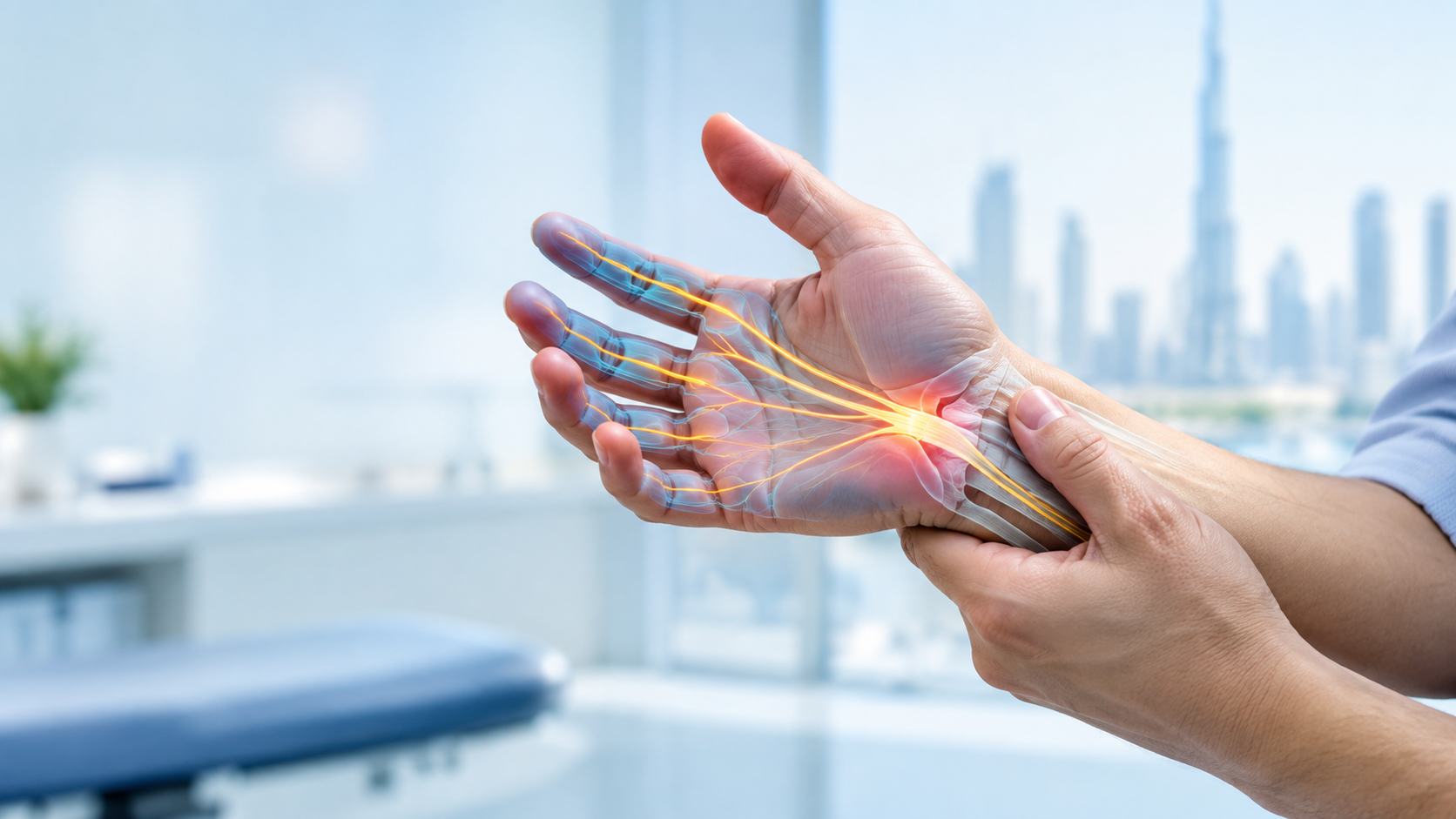
A structured approach to nerve injuries affecting feeling, control and function.

- Types of nerve injury
- Diagnosis and investigations
- Repair options and recovery stages

continuity.
Small structures.
Essential connections.
What is nerve repair surgery?
Peripheral nerves carry signals between the brain, skin and muscles. A deep cut, crush or stretch injury can interrupt that communication, affecting sensation, strength and movement.
Nerve repair surgery aims to reconnect a divided nerve or create a pathway for regenerating nerve fibres. The approach depends on the type and level of injury, the condition of the nerve ends and the time since the injury.
Carry touch, temperature and protective sensation.
Transmit signals that help muscles produce movement.
One vital system.
Different ways it can be hurt.
The type of injury influences how much the nerve can recover on its own and whether surgery, grafting or monitored rehabilitation is appropriate.
 01 / ACUTE
Sharp laceration
Glass, metal or a sharp edge may partially or completely divide a digital or major nerve, even through a small wound.
A SMALL WOUND CAN BE SIGNIFICANT ↗Crush injury
Heavy impact or machinery may disrupt internal nerve fibres, even when the nerve looks continuous on the outside.
SPECTRUM OF INJURY ↗Traction injury
Forceful stretching after a fall or collision may rupture or severely stretch peripheral nerve tissue.
REQUIRES SPECIALIST REVIEW ↗Post-operative nerve injury
Persistent or new changes in sensation or movement after a previous operation require careful review of clinical findings and operative history.
Not every damaged nerve
needs the same treatment.
Seddon's classification helps describe whether the nerve is temporarily blocked, injured within its sheath or fully divided — and that shapes the next step.
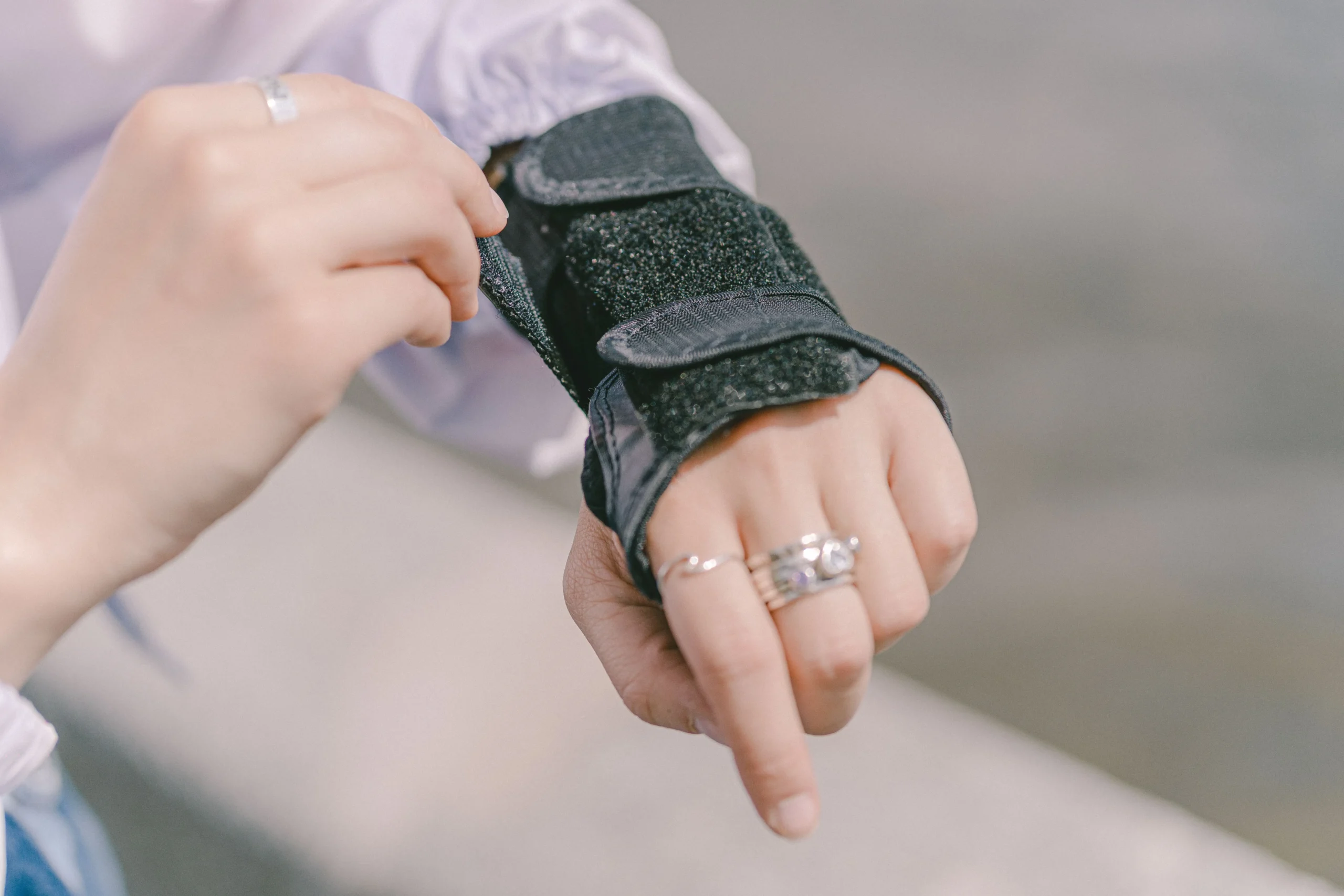
Temporary block
The nerve stays structurally continuous, but signal transmission is disrupted. Recovery may occur with time, protection and observation.
INTACT CONTINUITY
Internal fibre injury
Nerve fibres are disrupted inside supporting tissues. Recovery may be possible, but progress often needs careful clinical monitoring.
REGENERATION MAY OCCUR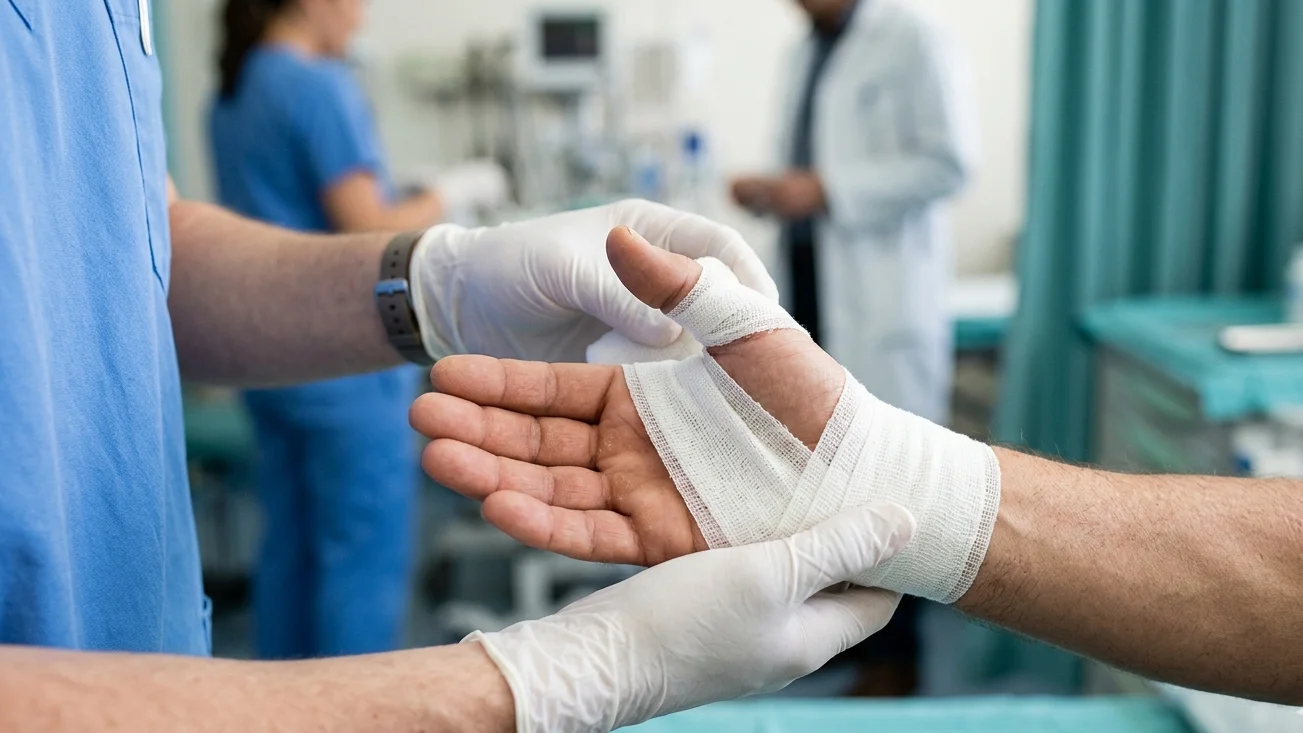
Complete division
The nerve pathway is interrupted. Surgical exploration and repair may be needed to restore continuity and support regeneration.
SURGICAL ASSESSMENTThe effects can reach
far beyond the wound.
Unrecovered nerve function can affect sensation, fine control and quality of life. Understanding these risks helps establish the right next steps.
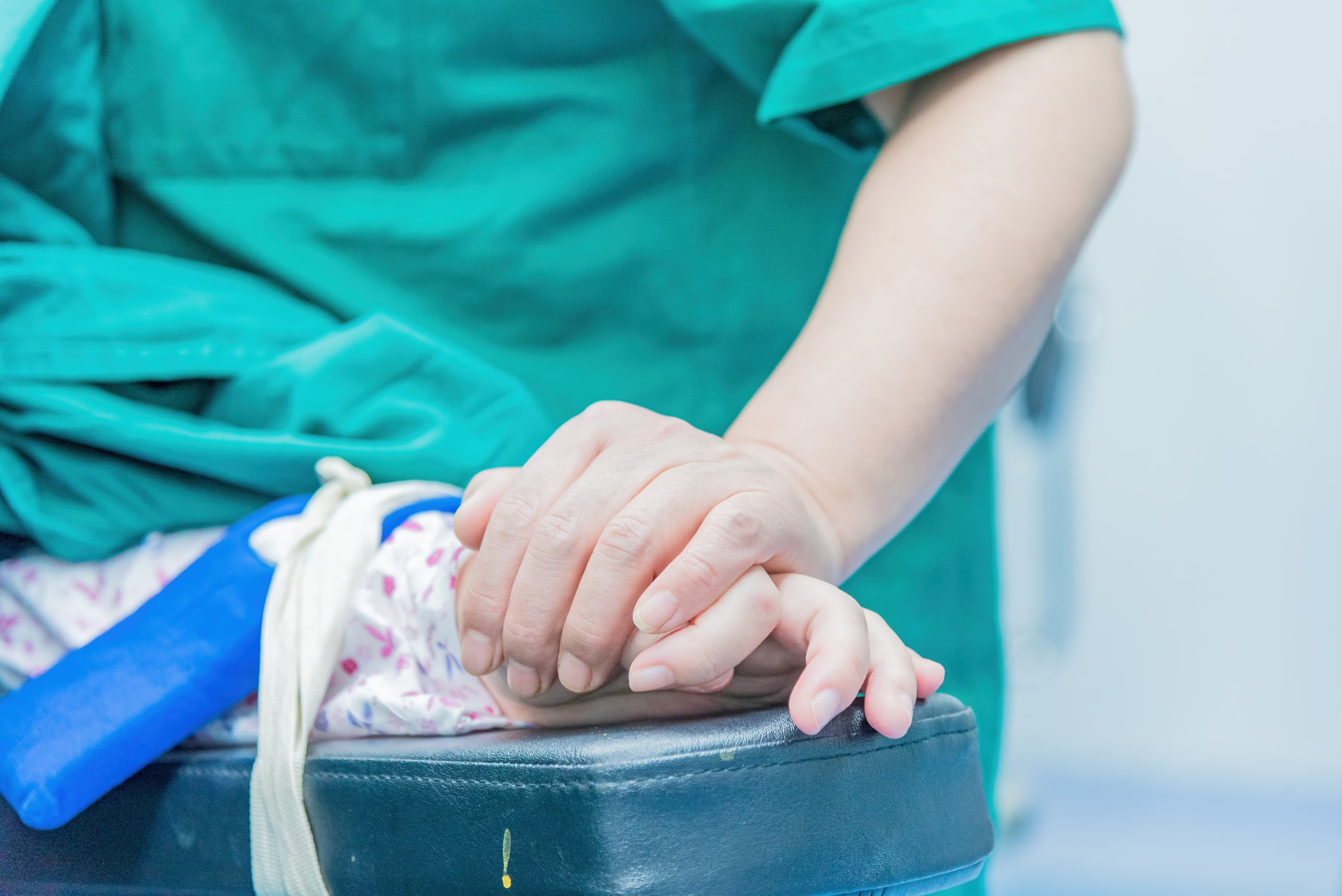 FUNCTION • SENSATION • INDEPENDENCE
Persistent numbness
Loss of protective sensation can make it harder to notice heat, sharp objects or excessive pressure during everyday activities.
Muscle weakness
Severe motor nerve injuries can result in progressive weakness and muscle wasting if effective reinnervation does not occur.
Neuropathic pain
Some nerve injuries cause burning, shooting or electric sensations, with hypersensitivity around the injured area.
Fewer reconstruction options
In prolonged injuries, changes in target muscles and nerve pathways can affect which procedures remain appropriate.
Precision starts
with understanding.
Examination establishes which nerve may be injured and whether clinical tests, imaging or electrical studies can clarify the treatment pathway.

Sensory testing
Light touch, two-point discrimination and protective sensation help map the areas affected.
Motor examination
Individual muscle testing looks for weakness or loss of movement in a specific nerve distribution.
Nerve conduction & EMG
Where indicated, electrical studies assess nerve function and signs of regeneration. Timing is tailored to the injury.
Ultrasound / MRI neurography
Selected imaging helps assess structural continuity, scarring or a suspected nerve lesion.
Different injuries.
Different repair strategies.
A more structured view of the reconstructive options: select each stage on the timeline to explore the principle, when it may be considered and the overall treatment direction.
 MICROSURGICAL THINKINGRestore the pathway.
Primary epineural repair.
The ends of a divided nerve are carefully aligned under magnification and sutured without undue tension. This may be suitable for selected clean nerve cuts where the ends can meet.
Treatment descriptions are educational and not a substitute for examination or individualised surgical advice.
Prepared for
every detail.
The right plan begins with a careful understanding of the injury, your medical history and the support you may need during recovery.
Specialist assessment
Review the wound, changes in sensation or movement, and the expected treatment options.
Wound protection
Keep the injured area protected and follow instructions for dressing, elevation and care.
Targeted investigations
Imaging or electrodiagnostic studies are requested when clinically useful; tests are not necessary for every injury.
Medical & anaesthetic review
Relevant health conditions, allergies and suitability for the planned procedure are discussed.
Medication instructions
Discuss prescribed medicines, especially blood thinners. Never stop medication unless your clinician tells you to.
Plan support at home
Arrange transport, follow-up appointments and any prescribed splinting or hand therapy.
Six considered steps.
One careful plan.
The exact procedure varies by the nerve, injury pattern and whether direct repair or grafting is needed.

Anaesthesia & preparation
Regional or general anaesthesia may be used, with the arm positioned for safe exposure.
Wound exploration
The surgeon identifies the injured nerve and checks surrounding tendons, vessels and tissues.
Nerve-end preparation
Damaged tissue may be trimmed and the gap assessed under magnification.
Tension assessment
Alignment is checked to determine whether repair can be completed without undue tension.
Repair or reconstruction
Microsurgical sutures, a graft, conduit or another option may be used where indicated.
Closure & protection
The wound is closed and a protective dressing or splint is applied as appropriate.
Recovery is a process.
Progress is personal.
Nerve regeneration and functional recovery can take months. Your plan depends on the injury, repair type and individual healing.
Protect the repair.
A dressing or splint may protect the surgical site while wound healing is monitored. Follow the specific movement and therapy advice provided by your surgeon and hand therapist.
These time ranges are broad educational stages, not a fixed protocol. Your clinical team will individualise immobilisation, exercises and follow-up.
Realistic expectations.
Clearer decisions.
No nerve operation can guarantee complete restoration of sensation or power. An individual consultation explains possible benefits, limitations and risks.
Incomplete recovery
Some sensory or motor deficits can persist despite technically successful repair.
Neuroma or sensitivity
Regenerating nerve tissue can be painful or hypersensitive near the repair site.
Donor-site changes
Harvesting a nerve graft may cause altered sensation where the donor nerve was taken.
Infection & scarring
Wound healing problems, scarring or stiffness may require further care and rehabilitation.
Expected outcomes vary by injury level, severity, treatment timing, individual factors and rehabilitation.
Focused reconstruction.
Assessment and treatment are centred on function, sensation and practical recovery goals.
Appointments can be requested directly through the DubaiHand booking pathway.
Specialist care,
presented clearly.
Why choose Dr. Mohamed Ali?
Microsurgical nerve work requires close clinical assessment, careful decision-making and attention to rehabilitation. The aim is not only to repair tissue, but to guide recovery in a way that supports useful day-to-day function.
Specialist care.
Within reach.
Consultations in Dubai for people with nerve injuries from Dubai, Abu Dhabi, Sharjah and across the UAE. You can request an appointment directly, without a GP referral.
Questions,
answered clearly.
A straightforward introduction to nerve injury, repair and recovery. Your own treatment plan will depend on medical assessment.
Can a cut nerve in the hand be repaired?
How long does recovery take?
What if a nerve is not repaired?
How do I know a nerve may be damaged?
Can nerve function return completely?
Do I need a referral to book in Dubai?
Let's reconnect with
what matters.
Book a consultation with Dr. Mohamed Ali to discuss your nerve injury, available investigations, repair options and what recovery may involve.