The wrist is one of the most complex joints in the human body, allowing for the intricate movements required for everything from typing a message to swinging a tennis racket. However, when pain strikes the “pinky side” of the wrist, it often stems from a specific structure called the Triangular Fibrocartilage Complex. If you are experiencing this sharp, limiting discomfort, you are likely wondering: can a tfcc tear get worse if left untreated?
In a bustling, active city like Dubai, where residents balance high-intensity sports with demanding professional lives, wrist injuries are common. Understanding the progression of a tfcc injury is crucial for long-term joint health. Ignoring the signs today could lead to chronic instability tomorrow.
What is the Triangular Fibrocartilage Complex (TFCC)?
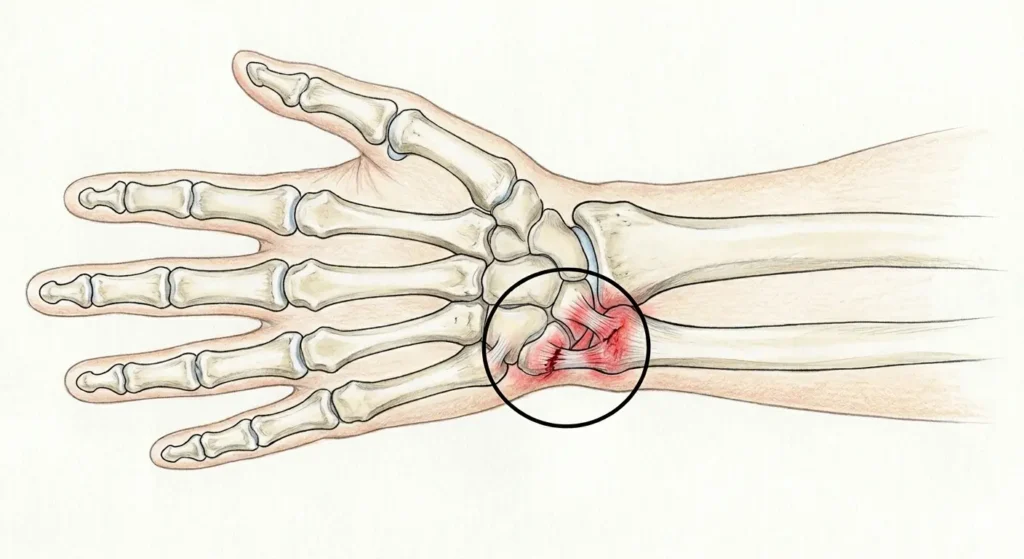
The TFCC is not a single structure but a complex web of ligaments, tendons, and cartilage. It is located on the ulnar side of the wrist (the side of your small finger). Think of it as the “meniscus of the wrist.” It serves two primary purposes:
- Stability: It keeps the two bones of the forearm (the radius and ulna) stable as the hand rotates or grips.
- Load Bearing: It acts as a shock absorber, cushioning the small carpal bones against the ulna.
When a TFCC ligament tear occurs, this stability is compromised. Because this area has a relatively poor blood supply, similar to the meniscus in the knee, healing can be slow, making professional intervention essential.
TFCC Sprain vs Tear
It is common for patients to confuse a sprain with a tear.
- A TFCC Sprain: This involves stretching or microscopic tearing of the ligaments. While painful, the structural integrity of the complex remains mostly intact.
- A TFCC Tear: This is a more significant physical disruption of the tissue.
If you suspect an injury, a TFCC tear test performed by a specialist is the only way to differentiate between the two. This usually involves physical maneuvers like the “Ulnar Fovea Sign” or the “Press Test,” where you attempt to lift yourself out of a chair using your hands. If these cause sharp tfcc pain, a tear is highly likely.
Types of TFCC Tears
Medical professionals categorize these injuries into two main types based on the cause:
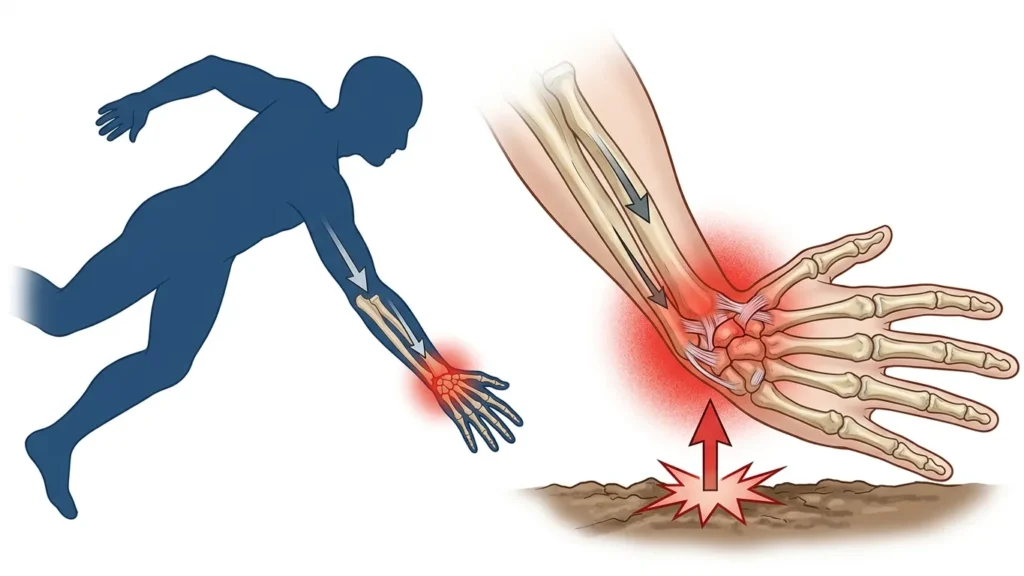
- Class 1 (Traumatic): These are caused by a specific event, such as falling on an outstretched hand (FOOSH) or a violent twisting of the wrist. These are common in athletes or workers in the UAE’s industrial sectors.
- Class 2 (Degenerative): These occur over time. As we age, the cartilage wears down. In some cases, if the ulna bone is slightly longer than the radius (ulnar variance), it can “poke” the TFCC, leading to a gradual tear.
How Common are TFCC Tears?
You might be surprised to learn that TFCC tears are quite common, though often underdiagnosed. Studies indicate that nearly 30% of people over the age of 30 may have some level of degenerative TFCC wear, even without symptoms. However, for active individuals in Dubai, from padel players to gym enthusiasts, traumatic tears are a frequent reason for seeking orthopedic care.
What is the Pain Pattern of a TFCC Tear?
The hallmark of a TFCC injury is “ulnar-sided” wrist pain. You might experience:
- Pain that worsens when leaning on your hand or pushing up from a chair.
- A “clicking” or “popping” sound when rotating your wrist (like turning a doorknob).
- Weakness in your grip strength.
- Deep, dull aching that intensifies with activity.
What Causes a TFCC Tear?
While we’ve touched on trauma and age, several factors contribute to these injuries:
- High-Impact Sports: Sports like tennis, golf, and gymnastics place immense pressure on the wrist.
- Repetitive Strain: Work that involves constant twisting or heavy lifting.
- Anatomical Factors: Having an ulna that is longer than the radius, putting constant pressure on the cartilage.

Can a TFCC Tear Get Worse?
The short answer is yes, a TFCC tear can get worse. Because the TFCC is responsible for stabilizing the distal radioulnar joint (DRUJ), a tear leaves the wrist “loose.”
If you continue to use a torn TFCC without proper TFCC tear treatment, several things happen:
- Increased Tear Size: A small partial tear can unzip into a full-thickness tear under continued stress.
- Cartilage Degradation: The uneven distribution of weight leads to the thinning of surrounding cartilage.
- Inflammation Cycle: Persistent use leads to chronic synovitis (inflammation of the joint lining), making the pain more frequent and harder to manage.
- Secondary Injuries: When one part of the wrist is weak, other ligaments and tendons overcompensate, leading to tendonitis in other areas of the hand.
Learn more about: Dr. Mohamed Ali The Best Hand Surgeon in Dubai
What are the Complications of a TFCC Tear?
If you ignore the question of whether a TFCC tear can get worse, you may face long-term complications:
- Chronic Instability: Your wrist may feel like it is “giving out.”
- Early-Onset Osteoarthritis: This is the most serious complication. Persistent instability causes the bones to rub together abnormally, leading to irreversible joint damage.
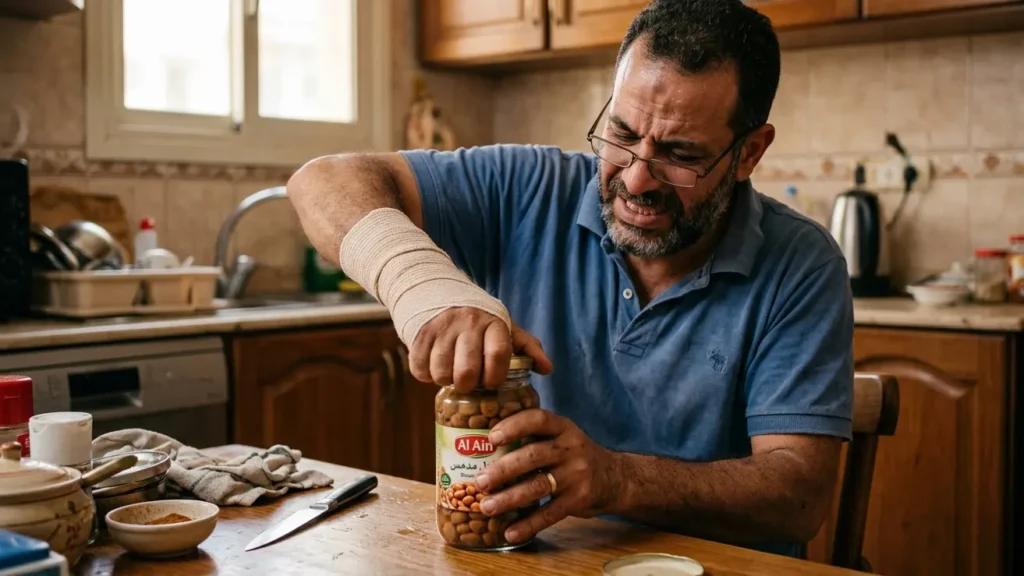
- Loss of Function: Over time, you may lose the ability to perform simple tasks, such as opening jars or typing for extended periods.
How Can I Prevent a TFCC Tear?
Prevention is always better than cure, especially in a high-performance environment:
- Strengthening: Incorporate tfcc exercises that focus on the pronator and supinator muscles of the forearm.
- Proper Form: Whether at the gym or playing sports, ensure your wrist is in a neutral position under load.
- Listen to Your Body: If you feel ulnar pain, rest immediately. Early use of a TFCC brace during high-stress activities can provide the necessary external support to prevent a minor strain from becoming a major tear.
Read more about: TFCC Tear Guide: Diagnosis, Recovery Time & Surgical Options
When Should I Call the Doctor?
You should consult an orthopedic specialist if:
- The pain does not improve after two weeks of rest.
- You hear a loud pop followed by immediate swelling.
- You have visible instability or a “bump” on the outside of your wrist.
- You cannot perform daily activities due to weakness.
Expert Orthopedic Care by Dr. Mohamed Ali in Dubai
When dealing with complex wrist injuries, experience matters. Residents looking for specialized care can find comprehensive diagnostic and treatment options at Dr. Mohamed Ali’s website. As a leading expert in orthopedic health in Dubai, Dr. Mohamed Ali utilizes advanced imaging and physical assessment techniques to determine the exact nature of your injury.
Whether your condition requires conservative management through physical therapy and specialized bracing or advanced tfcc tear surgery (often performed arthroscopically), the goal is always a return to full function with minimal downtime. In many cases, early intervention can answer the question “can a tfcc tear heal on its own” with a “yes,” provided the right environment for recovery is created through professional guidance.
Don’t endure the pain any longer!
Contact Dr. Mohamed Ali now and book an appointment for your recovery journey before it’s too late.
FAQs About "Can a TFCC Tear Get Worse?"
How do I know if my TFCC is severe?
Severity is usually marked by constant pain even at rest, a visible deformity or “clunking” of the wrist bone when rotating, and a significant loss of grip strength. An MRI is often required to confirm the grade of the tear.
How long does it take for a TFCC tear to fully recover?
The tfcc tear recovery time varies. Minor tears treated conservatively may take 6 to 12 weeks. If surgery is required, full recovery and return to sports can take anywhere from 3 to 6 months.
What are the long-term effects of a TFCC tear?
If untreated, the primary long-term effects are chronic wrist pain, permanent weakness, and the development of post-traumatic arthritis in the wrist joint.
Can a full TFCC tear heal without surgery?
A full (Class 1) traumatic tear in the “white zone” (the area with no blood supply) rarely heals completely on its own. However, many people manage the symptoms successfully without surgery through dedicated physical therapy and activity modification.
What is the hardest bone to heal in the wrist?
While the TFCC is a ligament/cartilage complex, the scaphoid bone is often considered the hardest bone to heal due to its unique blood supply. However, the TFCC shares this “poor blood supply” challenge, making it one of the most difficult soft-tissue structures to recover.
How painful is a TFCC tear?
It varies from a dull, nagging ache to a sharp, stabbing pain during rotation. Many patients describe it as a “toothache in the wrist” that becomes unbearable when trying to carry heavy objects.
Final Thoughts About the Common Question "Can a TFCC Tear Get Worse?"
Understanding that a tfcc tear can get worse is the first step toward recovery. While it is tempting to “push through” the pain, the unique anatomy of the wrist makes early diagnosis vital. By utilizing targeted tfcc exercises, proper bracing, and seeking expert advice from professionals like Dr. Mohamed Ali, you can protect your wrist and maintain your active lifestyle in Dubai.
Don’t wait for a minor clicking to become a permanent limitation. Proper care today ensures a pain-free tomorrow.