Comprehensive treatment for ligament instability in athletes
For athletes facing ligament injuries, effective treatment for ligament instability in athletes is paramount for a successful return to sport. Lingering instability can hinder performance, but with accurate diagnosis and a personalized plan, full recovery is achievable. This guide explores various treatment options, from conservative methods to advanced surgical techniques and rehabilitation strategies, ensuring athletes in Dubai and the UAE can make informed decisions about their care and regain their competitive edge.
Understanding Your Search: Seeking Solutions for Ligament Instability
When searching for “treatment for ligament instability in athletes,” you’re likely looking for comprehensive information on how to address a sports-related ligament injury, understand available treatment options, and find pathways to recovery. This article aims to provide athletes in Dubai and the UAE with a clear guide, from initial diagnosis to advanced rehabilitation, ensuring you can make informed decisions about your care and return to your sport safely and effectively. Our goal is to empower you with knowledge about both conservative and surgical approaches, emphasizing personalized care for optimal outcomes.
What Exactly is Ligament Instability in Athletes?
Ligaments are tough, fibrous bands of connective tissue that connect bones to other bones, providing vital stability to our joints. In athletes, these structures are frequently subjected to high forces and repetitive stress, making them susceptible to injury. When a ligament is stretched or torn, it can lead to joint laxity or instability.
This instability means the joint moves beyond its normal range, compromising its ability to function correctly and increasing the risk of further injury. Understanding the specific ligament affected and the degree of injury is the first step in determining the most effective treatment for ligament instability in athletes.
What causes ligament instability?
Ligament instability most commonly arises from acute trauma, such as a sudden twist, fall, or direct impact during sports activities. Common scenarios include:
- Sudden changes in direction (e.g., cutting in basketball or football).
- Awkward landings after a jump.
- Direct blows to a joint, like a tackle.
Overuse or chronic microtrauma can also weaken ligaments over time, leading to gradual instability. Genetic factors or certain connective tissue disorders can predispose some individuals to ligamentous laxity, making them more prone to instability even without significant trauma.
Understanding the Grades of Ligament Injuries in Athletes (Severity and Implications)
Ligament injuries, commonly known as sprains, are classified into three grades based on their severity. This grading system guides the management of ligament instability in athletes and predicts recovery timelines.
- Grade I Sprain: Mild Stretch
This involves a mild stretching of the ligament with microscopic tearing. There is minimal pain, swelling, and no joint instability. Athletes typically experience discomfort but can often bear weight. - Grade II Sprain: Partial Tear
A partial tear of the ligament, which can be visible on an MRI. This results in moderate pain, swelling, and some functional limitations. There is slight to moderate joint instability. - Grade III Sprain: Complete Rupture
Also known as a complete rupture or tear of the ligament. This is characterized by significant pain, swelling, and often bruising (ecchymosis). The joint is markedly unstable, and the athlete typically cannot bear weight.
Initial Treatment Approaches for Ligament Instability: The R.I.C.E. Protocol and Beyond
For immediate self-care following a ligament injury, especially for Grade I and II sprains, the R.I.C.E. approach is a fundamental first line of defense. You can find a comprehensive overview of sprain diagnosis and treatment, including the R.I.C.E. protocol, from authoritative sources like the Mayo Clinic.
The R.I.C.E. protocol involves:
- Rest: Avoid activities that cause pain, swelling, or discomfort. While complete immobilization is generally avoided for too long, resting the injured area is crucial in the initial 48-72 hours.
- Ice: Apply an ice pack to the injured area for 15-20 minutes every 2-3 hours for the first few days to reduce pain and swelling. Ensure a thin towel is placed between the ice and skin.
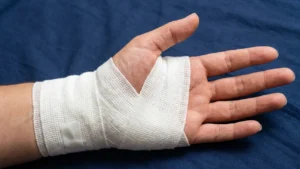
- Compression: Use an elastic bandage to compress the area, which helps to control swelling. Wrap from the point farthest from the heart, ensuring it’s not too tight to hinder circulation.
- Elevation: Elevate the injured area above the level of your heart, particularly at night, to reduce swelling through gravity.
Beyond R.I.C.E., over-the-counter pain medications like ibuprofen or acetaminophen can help manage pain and inflammation. Early consultation with a specialist, such as an orthopedic doctor in Dubai, is recommended to accurately diagnose the injury and establish a comprehensive treatment plan.
When is Non-Surgical Treatment for Ligament Instability in Athletes Effective?
Non-surgical approaches are highly effective for many ligament injuries, particularly Grade I and II sprains, and even some Grade III ankle ligament ruptures. The goal is to promote healing, restore stability, and prevent chronic instability.
Key components of effective non-surgical treatment for ligament instability in athletes include:
- Physical Therapy: A cornerstone of recovery, focusing on restoring range of motion, strength, proprioception (joint awareness), and neuromuscular control.
- Bracing or Splinting: Provides external support and protection to the injured joint, especially during the initial healing phases or for return to activity. For specific wrist injuries, splinting can be a crucial part of recovery.
- Activity Modification: Temporarily reducing or altering activities to allow the ligament to heal without undue stress.
- Medication: Non-steroidal anti-inflammatory drugs (NSAIDs) can help manage pain and inflammation, though their use in the very early stages is sometimes debated due to their potential to interfere with natural inflammatory healing processes.
Many athletes can achieve full recovery and return to their sport with a well-structured non-surgical plan. The effectiveness hinges on adherence to the rehabilitation program and careful progression.
Advanced Non-Surgical Treatments: Injections and Regenerative Therapies for Athletes
For athletes seeking to accelerate healing or manage persistent symptoms, advanced non-surgical options are increasingly being explored. These therapies aim to enhance the body’s natural healing capabilities.
How do you stabilize a loose ligament?
Stabilizing a loose ligament often involves a combination of these advanced treatments alongside targeted rehabilitation. These therapies aim to strengthen the existing ligament tissue or stimulate new tissue growth, thereby improving joint stability and function.
What is the new treatment for ligament repair?
Regenerative medicine, including Platelet-Rich Plasma (PRP) and other biologic injections, represents a growing area in managing ligament instability in athletes.
Here’s a closer look:
- Platelet-Rich Plasma (PRP) Injections: PRP is derived from the patient’s own blood, concentrated to contain a high number of platelets. These platelets release growth factors that promote tissue repair and regeneration. PRP has shown promise in treating tendinopathies like tennis elbow and jumper’s knee, and some studies suggest it may facilitate recovery in certain ligament injuries. However, evidence for its universal efficacy in all ligament injuries, particularly ACL, is still evolving, and some studies indicate no significant benefit over standard rehabilitation for muscle injuries. For hand and wrist injections, PRP can be a viable option when indicated.
- Prolotherapy: This involves injecting a dextrose solution into ligaments and tendons to stimulate a localized inflammatory response, theoretically promoting tissue proliferation and strengthening. While some reports suggest effectiveness, stringent medical evidence is still lacking for many ligamentous sprains.
- Stem Cell Therapy: Utilizes the body’s own stem cells to repair and regenerate damaged tissues. This is a frontier in regenerative medicine, with ongoing research into its application for ligament injuries.
These advanced treatments are typically considered after conservative methods have been exhausted or for specific injury types where evidence supports their use. A thorough evaluation by a sports medicine specialist is essential to determine suitability.
Surgical Interventions for Ligament Instability in Athletes: Repair vs. Reconstruction
When conservative and advanced non-surgical treatments are insufficient, or for severe Grade III ligament ruptures, especially in high-performance athletes, surgical intervention becomes a necessary option for addressing ligament instability in athletes.
What are the latest techniques for surgical ligament repair?
| Surgical Technique | Description | When It’s Used | Considerations for Athletes |
|---|---|---|---|
| Ligament Repair | Directly stitching the torn ends of the ligament back together. | Often for acute tears, particularly in ligaments with good healing potential like the Medial Collateral Ligament (MCL). | Preserves native tissue; faster initial recovery than reconstruction in some cases, but may not be suitable for severely retracted tears or chronic instability. |
| Ligament Reconstruction | Replacing the torn ligament with a graft, either from the patient’s own body (autograft) or from a donor (allograft). | For complete ruptures (Grade III), chronic instability, or when direct repair is not feasible (e.g., ACL tears). | Provides robust stability; autografts are generally preferred for younger, active athletes due to lower graft failure rates. |
For injuries like an ACL tear, reconstruction is often performed, with options including patellar tendon, hamstring, or quadriceps tendon autografts. Recent advancements include combined techniques like Anterolateral Ligament (ALL) reconstruction or Lateral Extra-articular Tenodesis (LET) alongside ACL reconstruction to enhance rotational stability and reduce re-rupture rates, particularly in young athletes with high-grade instability.
For more specific upper limb procedures, our clinic offers expertise in collateral ligaments repair and carpal ligaments repair.
The Critical Role of Physical Therapy in Recovering from Ligament Instability
Physical therapy is not merely a supportive measure; it is a fundamental and active component of managing this condition in athletes. Its importance cannot be overstated, whether following conservative management or post-surgery.
A structured rehabilitation program, guided by a qualified sports physiotherapist, is designed to:
- Restore full range of motion.
- Rebuild strength and endurance in the affected limb and surrounding muscles.
- Improve proprioception and neuromuscular control, which are vital for joint stability and preventing re-injury.
- Progress gradually through functional exercises to prepare the athlete for sport-specific demands.
The rehabilitation process is highly individualized, taking into account the athlete’s specific sport, position, and recovery goals. It emphasizes an active model, avoiding prolonged immobilization which can have detrimental effects on muscle tone and strength.
Athlete-Specific Rehabilitation Phases: From Injury to Return-to-Play
Modern sports injury rehabilitation follows a carefully structured, criteria-based phased approach, rather than rigid timeframes. This ensures the athlete progresses safely and effectively, reducing the risk of setbacks.
The general phases include:
- Acute Phase (Protection & Pain Management): Focus on reducing pain and swelling using R.I.C.E. and gentle, pain-free movement to prevent stiffness.
- Subacute Phase (Early Motion & Strengthening): Gradually increase range of motion, introduce light resistance exercises, and begin isolated strengthening of supporting muscles.
- Remodeling/Intermediate Phase (Progressive Loading & Neuromuscular Control): Advance to progressive resistance training, balance work, and exercises that challenge neuromuscular control. This phase builds foundational strength and stability.
- Return-to-Sport Phase (Sport-Specific Training & Performance): Integrate highly specific drills that mimic the demands of the athlete’s sport. This includes agility, plyometrics, cutting movements, and controlled contact if applicable. This phase is critical for ensuring the athlete is physically and psychologically ready.
Throughout these phases, progression is based on achieving specific functional milestones, such as pain-free range of motion, symmetrical strength, and adequate balance, rather than simply elapsed time. For athletes in Dubai, our sports injury therapy focuses on these detailed, phased protocols to ensure optimal recovery.
Preventing Recurrent Ligament Instability in High-Performance Athletes
Preventing re-injury is a cornerstone of long-term success for athletes recovering from ligament instability. This goes beyond just healing the initial injury; it involves building resilience and addressing risk factors.
How can athletes prevent ligament re-injury?
Effective prevention strategies for recurrent ligament instability include:
- Neuromuscular Training: This involves exercises that improve proprioception, balance, and coordination, helping the body react quickly and appropriately to unexpected movements.
- Strength and Conditioning: Maintaining optimal strength and endurance in muscles surrounding the joint provides dynamic stability and reduces stress on ligaments.
- Sport-Specific Drills: Incorporating exercises that simulate game situations, focusing on proper landing mechanics, cutting techniques, and agility, can prepare the athlete for the demands of their sport.
- Bracing and Taping: For some athletes, particularly during the initial return to play or in sports with high risk of re-injury, external support like bracing or taping can provide added confidence and stability.
- Proper Equipment and Footwear: Ensuring appropriate gear that fits well and provides adequate support can minimize risk.
- Gradual Return to Play: Rushing back to sport too early is a significant risk factor for re-injury. Adhering to strict, criteria-based return-to-play guidelines is crucial.
- Injury Prevention Programs: Specific training programs designed to reduce the risk of primary ACL injuries, for instance, have been shown to be effective, especially in high-risk sports.
By integrating these strategies, athletes can significantly reduce their risk of experiencing recurrent ligament instability and maintain peak performance. For comprehensive guidance on sports injury prevention, we offer tailored advice.
Recent Advancements in Ligament Instability Treatment for Athletes (Freshness Signal)
The field of sports medicine is continuously evolving, bringing new hope and improved outcomes for athletes facing ligament instability. Recent years have seen significant advancements in both surgical and non-surgical approaches.
Some notable developments include:
- Earlier Surgical Intervention for ACL Tears: Newer guidelines recommend ACL reconstruction within three months of injury to reduce the risk of additional cartilage and meniscal damage, a shift from previous recommendations.
- Enhanced ACL Reconstruction Techniques: The integration of Anterolateral Ligament (ALL) reconstruction or Lateral Extra-articular Tenodesis (LET) with traditional ACL reconstruction has shown promise in improving rotational stability and reducing re-rupture rates, particularly in young, active athletes with marked instability.
- Refined Biologic Therapies: Ongoing research is delving deeper into the efficacy of various regenerative treatments. While PRP is well-established for certain conditions, the understanding of its optimal application for ligament injuries is becoming more nuanced, with studies exploring different formulations and delivery methods.
- Advanced Rehabilitation Protocols: A stronger emphasis on criteria-based rather than time-based progression, incorporating advanced functional testing, psychological readiness assessments, and personalized sport-specific drills, is leading to safer and more effective returns to play.
These advancements underscore the dynamic nature of sports medicine, continually striving to optimize the management of ligament instability in athletes and enhance their recovery journeys.
What Are the Long-Term Outcomes for Athletes with Ligament Instability?
The long-term outcomes for athletes with ligament instability vary significantly depending on the severity of the injury, the effectiveness of the treatment, adherence to rehabilitation, and individual biological factors. While many athletes return to their pre-injury level of performance, some may face ongoing challenges.
Potential long-term considerations include:
- Chronic Instability: Despite treatment, some individuals may experience persistent joint laxity, increasing the risk of recurrent sprains. Up to 40% of patients experience residual symptoms after an ankle sprain.
- Osteoarthritis: Ligament injuries, particularly severe ones, can alter joint mechanics and increase the risk of developing early-onset osteoarthritis over time. Chronic ankle instability can significantly increase the risk of long-term joint degeneration.
- Pain and Stiffness: Some athletes may experience occasional pain, stiffness, or discomfort, especially with changes in weather or after intense activity.
- Reduced Performance: In some cases, athletes may not fully regain their pre-injury speed, agility, or power, impacting their ability to compete at the same level.
Proactive management, including ongoing preventive strategies and addressing any residual instability, is crucial for optimizing long-term joint health and athletic longevity. Our treatment approaches focus on holistic, long-term well-being.
Frequently Asked Questions About treatment for ligament instability in athletes
How long does it take for ligament instability to heal?
Healing times for ligament instability vary greatly depending on the grade of injury. Grade I sprains may heal in a few weeks, while Grade II sprains typically take 3-6 weeks. Complete Grade III ruptures can require 6-12 weeks of rehabilitation, and surgical reconstruction may involve a recovery period of 6-12 months before a full return to sport.
What is the best treatment for ligament injury?
The “best” treatment depends on the specific injury’s grade, location, and the athlete’s goals. For mild to moderate injuries, conservative treatment with R.I.C.E., physical therapy, and bracing is often highly effective. For severe tears or chronic instability, surgical repair or reconstruction combined with intensive rehabilitation is typically recommended.
Can you play sports with ligament instability?
Playing sports with untreated ligament instability is strongly discouraged. It significantly increases the risk of further, more severe injury, chronic pain, and long-term joint damage. It is essential to achieve appropriate stability through treatment and meet specific return-to-play criteria before resuming athletic activities.
What are the risks of returning to sport too early after a ligament injury?
Returning to sport too early after a ligament injury carries significant risks, including re-injury of the same ligament, injury to other ligaments or structures due to compensatory movements, and the development of chronic instability or early-onset osteoarthritis. A gradual, criteria-based return-to-play protocol is essential for athlete safety and long-term health.
Can you fix ligament instability without surgery?
Yes, many cases of ligament instability, particularly Grade I and II sprains, can be effectively managed and “fixed” without surgery through conservative treatments. These include rest, ice, compression, elevation (R.I.C.E.), extensive physical therapy to strengthen surrounding muscles and improve joint stability, and bracing. Advanced non-surgical options like PRP may also be considered in specific scenarios.
How do you treat ligament laxity in athletes?
Treating ligament laxity in athletes involves a tailored approach. Initially, it often includes R.I.C.E. and pain management. The core of treatment focuses on comprehensive physical therapy to build dynamic joint stability through strength, balance, and neuromuscular control exercises. For persistent or severe laxity, regenerative injections or surgical intervention may be considered to restore structural integrity and functional stability.
Resources and Further Reading
- Mayo Clinic: Sprains – Diagnosis and treatment: Provides a comprehensive overview of sprain diagnosis and treatment, including the R.I.C.E. protocol.
- NIH PMC: Use of platelet-rich plasma in the care of sports injuries: Discusses the application and efficacy of PRP in sports injury management, including ligaments.
- American Academy of Orthopaedic Surgeons (AAOS): Clinical Practice Guideline for the Management of Anterior Cruciate Ligament Injuries: Offers detailed, evidence-based guidelines for ACL injury treatment and prevention.
- NIH StatPearls: Acute Ankle Sprain: Comprehensive review of ankle sprain grades, management, and long-term outcomes.
Conclusion
Effective treatment for ligament instability in athletes demands a precise, personalized, and progressive approach. From accurate diagnosis and initial conservative care to advanced surgical techniques and rigorous, athlete-specific rehabilitation, every step is critical for a successful return to sport. By understanding the severity of the injury, exploring all available treatment modalities, and committing to a comprehensive recovery plan, athletes can overcome ligament instability and regain their competitive edge.
Ready to Take the Next Step?
If you’re an athlete in Dubai or the wider UAE experiencing ligament instability, don’t let it sideline your passion. Dr. Mohammad Ali, a Fellowship-Trained Hand, Wrist and Upper Limb Surgeon, and our expert team at Dubai Hand are dedicated to providing world-world-class orthopedic and sports injury care. We offer tailored treatment plans to help you recover fully and return to your peak performance. Contact us today to schedule your consultation and begin your journey back to optimal health and sport. Schedule Your Consultation Today.
External Links Used
National Institutes of Health (NIH) / StatPearls: Provides a comprehensive review of acute ankle sprains, including grading, management, and long-term outcomes.
Mayo Clinic: Provides detailed information on sprain diagnosis, R.I.C.E. protocol, and treatment options.
National Institutes of Health (NIH) / PMC: Discusses the application and effectiveness of platelet-rich plasma (PRP) in sports injury care.
American Academy of Orthopaedic Surgeons (AAOS): Offers evidence-based clinical practice guidelines for the management of ACL injuries.