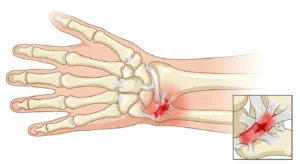
Living in a fast-paced city like Dubai requires our hands to be at their best, whether we are navigating digital interfaces for work or enjoying an active lifestyle. However, when a finger starts to catch, snap, or get stuck in a bent position, it can significantly impact your productivity and quality of life. This condition, medically known as stenosing tenosynovitis, is what many commonly refer to as trigger finger.
If you are experiencing trigger finger symptoms, you are not alone. From the discomfort of clicking fingers to the frustration of a finger snap that won’t move smoothly, understanding the root of the problem is the first step toward effective treatment. In this guide, we will explore everything from early warning signs to the advanced surgical solutions provided by Dr. Mohamed Ali.
What is Trigger Finger or Trigger Thumb?
Trigger finger is a condition that affects the tendons in your fingers or thumb. Tendons are tough bands of tissue that connect muscle to bone. Each tendon is surrounded by a protective sheath. Trigger finger occurs when this sheath becomes irritated and inflamed, interfering with the normal gliding motion of the tendon through the sheath.
When the tendon cannot move smoothly, it may thicken or form a small nodule. This makes it difficult for the finger hands to extend or flex. In many cases, the finger may “pop” or “snap” suddenly, much like a trigger being pulled and released—hence the name. While it can affect any digit, it is very common in the pinky finger and the thumb (trigger thumb).
Recognizing the Early and Advanced Trigger Finger Symptoms
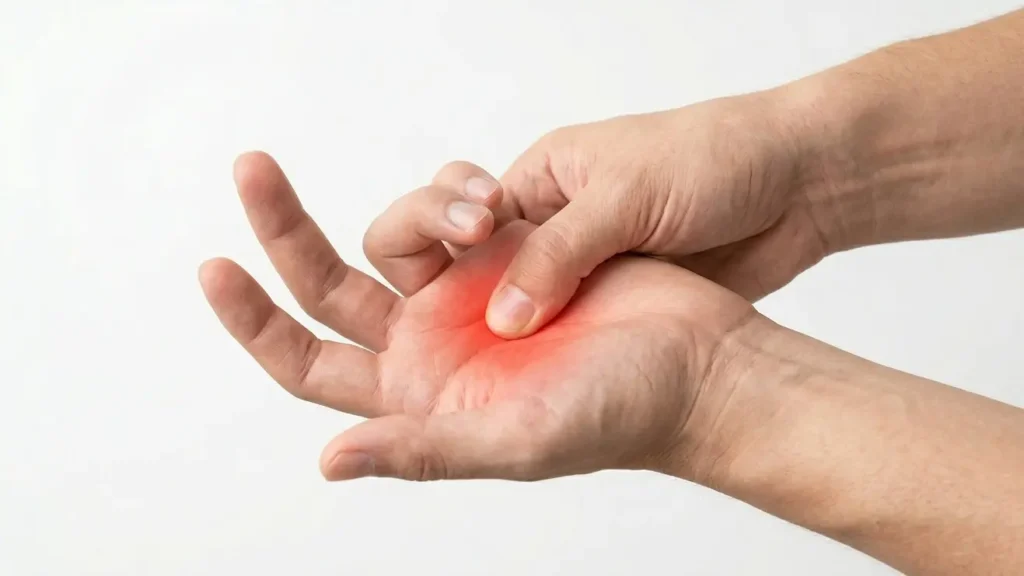
The onset of trigger finger symptoms can be subtle, often starting with mild soreness at the base of the finger or thumb. Over time, these symptoms can progress into more restrictive functional issues.
Common Signs to Watch For:
- Finger Stiffness: Especially prominent as trigger finger symptoms at night or upon waking up in the morning.
- Clicking or Popping: A palpable finger snap or clicking sensation when moving the digit.
- Tenderness or a Bump: You may feel a small, sensitive nodule in the palm at the base of the affected finger.
- Catching or Locking: The finger suddenly locks in a bent position, which may then pop straight.
- Inability to Straighten: In severe cases, the finger becomes locked in a bent position and cannot be straightened even with help.
Why Symptoms Worsen at Night??
Many patients in Dubai report that their trigger finger symptoms at night are the most distressing. This is often because we tend to curl our fingers into a fist while sleeping, allowing the inflamed tendon to “set” in a restricted position. By morning, the lack of fluid movement makes the first few hours of the day particularly stiff and painful.
Read also about trigger finger treatment and the non-surgical & surgical options.
Potential Complications: Why Early Intervention Matters
Ignoring the signs of a dislocated finger sensation or persistent clicking fingers can lead to permanent stiffness. If the tendon sheath remains inflamed for a long duration, scarring can occur.
- Permanent Contracture: The finger may become permanently bent, requiring more complex finger plastic surgery to correct.
- Secondary Joint Pain: Overcompensating for a locked finger can lead to pain in the wrist or other fingers.
- Infection: While rare, chronic inflammation can occasionally lead to localized infections if the skin over a nodule is repeatedly irritated.
Management and Treatment Options
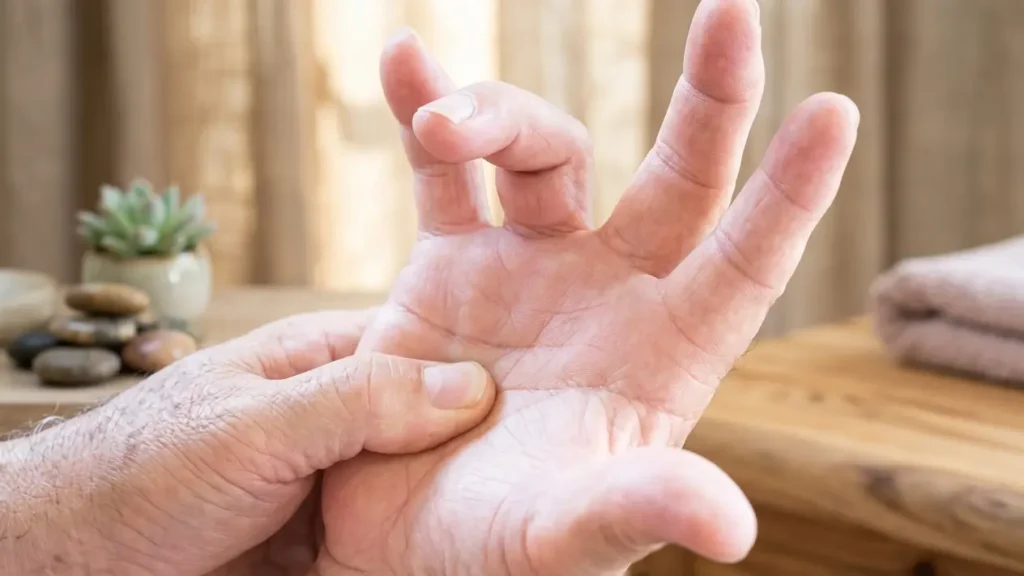
Treatment for trigger finger ranges from conservative home care to specialized surgical intervention. The goal is always to reduce swelling and restore the tendon’s ability to move smoothly.
1. Conservative and Home Treatments
For mild cases, non-surgical approaches are often the first line of defense:
- Rest: Avoiding repetitive gripping or “holding fingers” in tight positions for long periods.
- Splinting: Using a trigger finger splint, pinky finger splint, or a little finger splint can keep the affected digit in a neutral position, especially during sleep.
- Exercises: Specific trigger finger exercises and trigger thumb exercise routines help maintain flexibility without overstraining the sheath.
- Physiotherapy: Professional trigger thumb physiotherapy focuses on ultrasound therapy and manual stretching.
2. Supportive Gear
Choosing the right finger support is crucial. Whether you need a thumb support, a hand splint, or a small finger splint, these devices prevent the tendon from catching while you go about your day. For those with specific injuries like a mallet finger splint or mellet finger splint requirement, specialized orthotics are available to ensure the joint heals correctly.
3. Medical Interventions
- Steroid Injections: A corticosteroid injection near or into the tendon sheath can reduce inflammation significantly, often providing relief for several months.
- Trigger Finger Ultrasound: High-resolution ultrasound can be used both for diagnosis and to guide injections with pinpoint accuracy.
4. Surgical Solutions
When conservative measures fail, surgery is the most effective long-term solution.
- Trigger Finger Release Surgery: This is a quick, outpatient procedure where the surgeon makes a small incision to release the tight portion of the tendon sheath.
- Percutaneous Release: A needle is used to break up the tissue that is restricting the tendon, performed under local anesthesia.
Read also about how to prevent trigger finger and the top tips for hand health.
When to See a Doctor in Dubai
If you find that your bent pinky fingers are interfering with your daily tasks, or if you feel a heat sensation and see redness (which could indicate infection), it is time to seek professional help. If a finger joint appears to be a dislocated finger, immediate orthopedic assessment is required.
Living with pinky finger pain or a thumb that catches shouldn’t be your “new normal.” Seeking an expert opinion early can prevent the need for more invasive procedures later.
Experience Advanced Hand Care with Dr. Mohamed Ali
When it comes to delicate hand structures, precision is everything. Dr. Mohamed Ali is a renowned specialist in the field of orthopedics and hand surgery, offering world-class care right here in Dubai.
Choosing Dr. Mohamed Ali for your treatment means benefiting from:
- Expert Diagnosis: Utilizing advanced trigger finger ultrasound technology to assess the severity of your condition.
- Tailored Treatment Plans: From custom hand splint fitting to advanced finger plastic surgery, every plan is unique to the patient.
- Minimally Invasive Techniques: Focusing on rapid recovery so you can return to your routine with fingers that move smoothly.
- Comprehensive Aftercare: Detailed guidance on trigger finger exercises to ensure long-term mobility and prevent recurrence.
Don’t let hand pain hold you back!
Book your consultation with Dr. Mohamed Ali today and take the first step toward pain-free movement.
FAQs about trigger finger symptoms
How to get rid of a trigger finger?
Getting rid of trigger finger involves a stepped approach. Start with rest and a trigger finger splint. If symptoms persist, Dr. Mohamed Ali may recommend anti-inflammatory medication, steroid injections, or a minor surgical release to permanently fix the mechanical catching.
What vitamin deficiency causes trigger finger?
While there isn’t a single “trigger finger vitamin,” deficiencies in Vitamin B6 and Vitamin B12 are sometimes linked to peripheral nerve and tendon health. However, trigger finger is primarily a mechanical issue caused by inflammation, not just nutrition.
What is the cause of trigger finger?
The primary cause is repetitive strain or forceful use of the fingers and thumb. Conditions like diabetes, rheumatoid arthritis, and gout also increase the risk of developing trigger finger symptoms.
Should you massage a trigger finger?
Gentle massage around the base of the finger can help improve blood flow and reduce stiffness. However, aggressive massage can increase inflammation. It is best to follow a guided trigger thumb physiotherapy routine.
Final thoughts on trigger finger symptoms
Understanding trigger finger symptoms is the key to preventing long-term hand disability. Whether you are dealing with clicking fingers, a frustrating finger snap, or the discomfort of bent pinky fingers, there is a clear path to recovery. By combining conservative measures like a finger support or trigger thumb exercise with the expert surgical intervention of Dr. Mohamed Ali, you can restore the full function of your hands.
Don’t wait for your symptoms to worsen. Reach out to Dr. Mohamed Ali and rediscover the freedom of movement your hands deserve.