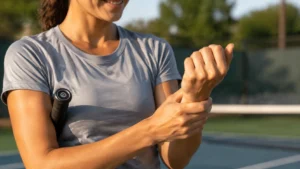
Waking up with a sharp, burning pain on the outside of your elbow can make the simplest tasks feel monumental. Whether it is turning a doorknob, lifting your morning cup of coffee, or shaking hands during a business meeting in Downtown Dubai, lateral epicondylitis can significantly disrupt your lifestyle. If you are searching for effective, long-term tennis elbow pain relief, you are not alone.
While the condition is highly frustrating, specialized orthopedic care can help you regain pain-free function. For individuals navigating this painful condition, understanding the root causes and modern treatment options is the first step toward recovery. Seeking consultation from a leading specialist, such as Dr. Mohamed Ali, ensures access to advanced treatments tailored to your specific physical demands.
What is Tennis Elbow?
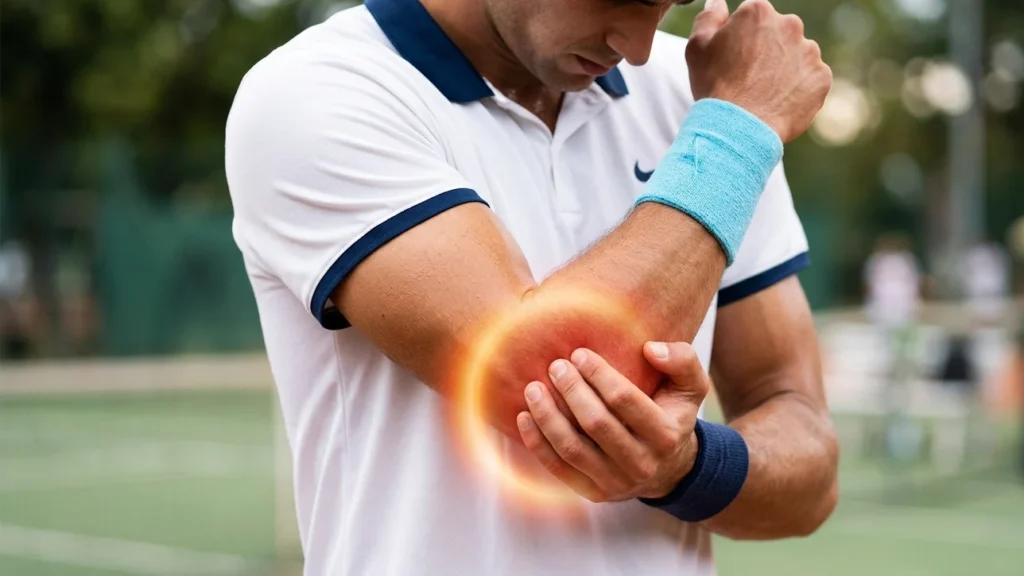
Despite its name, tennis elbow—medically known as lateral epicondylitis—is not limited to athletes. It is a painful musculoskeletal condition characterized by the inflammation or micro-tearing of the tendons that join your forearm muscles to the outside of your elbow.
Specifically, it targets the Extensor Carpi Radialis Brevis (ECRB) tendon. This muscle and tendon structure is responsible for stabilizing the wrist when the elbow is straight. When weakened by repetitive stress, tiny tears form at the point where the tendon attaches to the lateral epicondyle (the bony bump on the outside of your elbow), leading to persistent distress and decreased grip strength.
How Do You Get Tennis Elbow?
This condition is fundamentally an overuse injury driven by repetitive microtrauma. Any activity that places prolonged stress on the forearm extensor muscles can strain the tendon tissue. Common causes include:
- Repetitive Motions: Activities involving continuous wrist extension, forearm supination (turning the palm up), or gripping.
- Occupational Hazards: Professionals in trades such as plumbing, painting, carpentry, and typing are highly susceptible due to repetitive tool handling.
- Sports Mechanics: Playing racket sports with improper technique, an oversized grip, or heavy balls increases the mechanical load on the elbow joint.
- Sudden Unaccustomed Activity: Embarking on intense manual tasks, such as heavy lifting or home renovation projects, without proper physical conditioning.
How to Know If You Have Tennis Elbow
Identifying the early signs of lateral epicondylitis allows you to seek intervention before the tendon undergoes structural failure or extensive fibrosis. Watch for these hallmark symptoms:
- Localized Pain: A dull ache or sharp pain directly over the bony bump on the outside of your elbow.
- Radiation: Pain that travels down your forearm toward the wrist, especially during or after activity.
- Grip Weakness: Difficulty holding everyday objects, opening jars, or maintaining a firm handshake due to localized discomfort.
- Aggravation with Extension: Noticeable pain amplification when you extend your wrist or fingers against resistance, such as lifting a laptop or typing.
Does Tennis Elbow Go Away on Its Own?
The natural progression of a tendon injury depends heavily on early management and activity modification. In many instances, mild cases can resolve over a period of several months through dedicated rest and the avoidance of aggravating activities.
However, because tendons receive a limited blood supply compared to muscles, the self-repair process is inherently slow. Without targeted clinical evaluation and biomechanical corrections, chronic degeneration can develop. Left unmanaged, what begins as minor tissue inflammation can evolve into permanent tendon scarring, structural weakness, and persistent pain that fails to improve on its own.
How to Diagnose Tennis Elbow
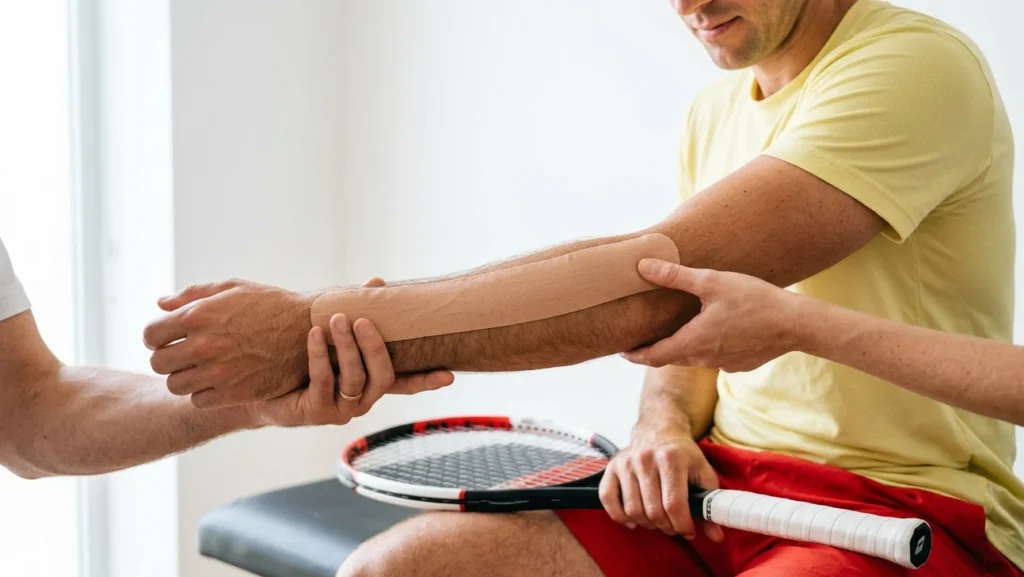
When you visit a clinical specialist, a definitive diagnosis is established primarily through a detailed physical evaluation. A skilled physician will perform specialized provocative maneuvers to isolate the source of your pain:
- The Cozen Test: The specialist applies resistance against your extended wrist while palpating the lateral epicondyle. If this action replicates your pain, the test is positive.
- The Mill’s Test: The doctor gently stretches the forearm extensor muscles by flexing your wrist while keeping the elbow straight.
- The Middle Finger Test: Resistance is applied to your middle finger to differentiate lateral epicondylitis from radial tunnel syndrome, a nerve entrapment issue that mimics elbow pain.
While diagnostic imaging like X-rays cannot show tendon damage, they are used to rule out arthritis or bone spurs. For chronic or complex cases, an ultrasound or Magnetic Resonance Imaging (MRI) may be requested to visualize the exact extent of tendon micro-tears or tissue degradation.
How to Fix Tennis Elbow
Achieving lasting tennis elbow pain relief requires a systematic approach that moves beyond temporary symptom masking to target the underlying tissue degeneration. The standard protocol follows a progressive ladder of non-invasive and minimally invasive interventions.
1. Advanced Non-Surgical Treatments
For cases that do not respond to basic home care, cutting-edge regenerative medicine provides a highly effective alternative. Regenerative therapies can stimulate the body’s natural healing mechanisms to repair structural tissue damage without surgery.
- Platelet-Rich Plasma (PRP) Injections:
This modern treatment utilizes a concentrated solution of your own blood platelets, rich in growth factors, which is precisely injected into the damaged ECRB tendon origin. Clinical evidence demonstrates that while corticosteroid injections offer short-term relief, PRP therapy delivers significantly superior pain reduction and functional improvement at the 3-month and 6-month marks by actively promoting tissue repair. - Extracorporeal Shockwave Therapy (ESWT):
This non-invasive method delivers acoustic sound waves directly to the affected elbow area. Clinical studies confirm that ESWT significantly decreases pain scores and improves physical functionality by breaking down scar tissue, boosting local blood circulation, and restarting the healing process in chronic, non-responsive conditions.
2. Surgical Interventions
Surgery is reserved as a final option, considered only after 6 to 12 months of comprehensive, failed conservative therapy. The procedure focuses on the precise debridement (removal) of chronically degraded, pathological tendon tissue and the reattachment of healthy tendon fibers to the bone bed to stimulate a robust healing response. Modern options include minimally invasive arthroscopic surgery, which allows for faster recovery times and a quicker return to daily routines.
Tennis Elbow Pain Relief Medicine
Pharmacological options are valuable for controlling acute flare-ups and keeping discomfort manageable during your recovery.
- Topical NSAIDs: Gels and patches containing nonsteroidal anti-inflammatory drugs (such as diclofenac) are highly recommended as a first-line approach. They deliver localized pain reduction directly to the elbow joint with minimal systemic absorption, vastly reducing the risk of gastrointestinal side effects.
- Oral Medications: Short-term use of oral anti-inflammatories can help mitigate acute pain, though they should be monitored to prevent digestive distress.
- A Note on Corticosteroid Injections: While a cortisone injection can offer rapid pain suppression within the first month, clinical research advises caution. Repeated steroid injections can suppress collagen synthesis, weaken tendon structures, and lead to high recurrence rates or potential tissue atrophy over the long term.
How to Wear a Tennis Elbow Brace
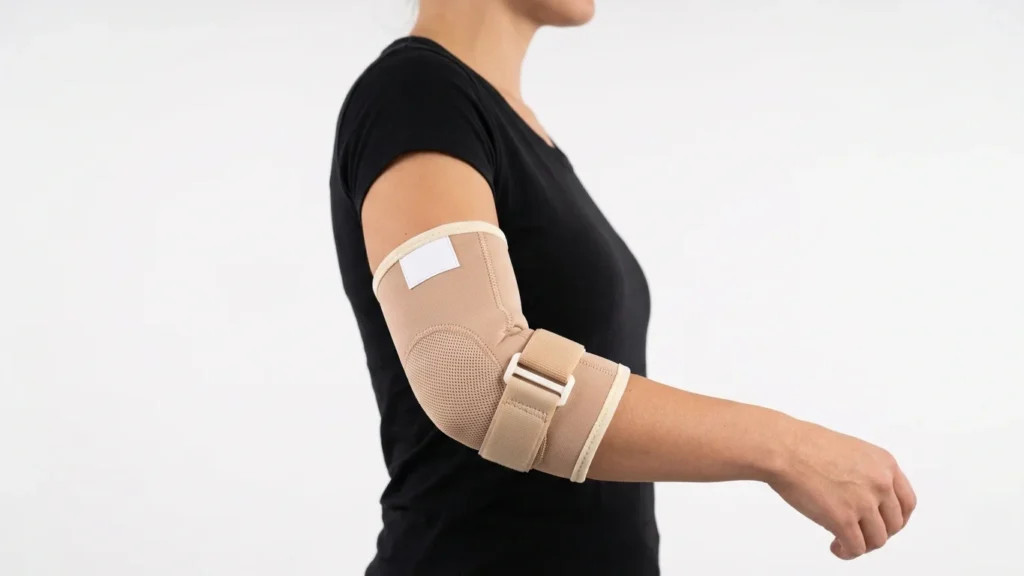
Using orthopedic support is an excellent way to reduce mechanical strain on your healing tendon during daily activities. To achieve maximum benefit, you must select and position these supports correctly.
- The Counterforce Band: A specialized tennis elbow band or tennis elbow support works by applying targeted compression over your forearm muscles. Rather than placing the tennis elbow brace directly on the painful bony bump, position it approximately 2 to 3 centimeters below the area of maximum tenderness. This strategic placement redistributes structural forces, preventing the mechanical tension generated by your wrist from traveling all the way up to the vulnerable tendon origin.
- Wrist Splints: In severe or highly acute cases, a cock-up wrist brace worn during daily tasks can provide immense relief. By immobilizing the wrist, it prevents the forearm extensor muscles from firing altogether, giving the injured ECRB tendon the complete rest it needs to initiate repair.
Useful Tennis Elbow Exercises
Once your acute pain is under control, structured physical therapy is essential for rebuilding tissue resilience and preventing future reinjury. Incorporating targeted tennis elbow exercises into your routine helps restore flexibility and muscular strength.
1. Isometric Wrist Extension
- Sit down and rest your forearm comfortably on a flat table, keeping your palm facing down and your hand hanging slightly over the edge.
Place your opposite hand over your knuckles to act as resistance. - Press your affected wrist upward against the resistance of your hand, ensuring your wrist does not actually move up or down.
- Hold this steady contraction for 10 to 15 seconds, then slowly release. Repeat for 3 sets of 5 repetitions to build foundational strength without straining the joint.
2. Eccentric Wrist Extension
- Position your forearm on a table with your palm facing down, holding a light dumbbell (1 to 2 kg).
Use your unaffected hand to gently lift your wrist upward into an extended position. - Remove the supporting hand, and use only your affected forearm to slowly lower the weight back down over a slow, controlled 4-to-5-second count.
- Focusing on the lowering phase (eccentric muscle elongation) is clinically proven to stimulate collagen alignment and accelerate tendon recovery. Perform 3 sets of 10 repetitions.
3. Forearm Supination and Pronation
- Sit down and hold the bottom base of a light hammer or a small dumbbell in your hand, keeping your elbow bent at a 90-degree angle.
Slowly rotate your forearm outward until your palm faces upward toward the ceiling (supination). - Pause briefly, then smoothly rotate your forearm inward until your palm faces downward toward the floor (pronation).
- Maintain a controlled, steady tempo throughout the movement. Complete 2 sets of 15 controlled repetitions.
How Long Does It Take for Tennis Elbow to Heal?
The recovery timeline for lateral epicondylitis varies based on the chronicity of the injury and the treatment approach used.
|
Condition Severity
|
Typical Recovery Window
|
Primary Management Strategy
|
|---|---|---|
|
Acute / Mild Cases
|
4 to 12 Weeks
|
Activity modification, topical NSAIDs, counterforce bracing, and basic physical therapy.
|
|
Chronic / Moderate Cases
|
3 to 6 Months
|
Advanced physical therapy, custom eccentric exercises, and regenerative protocols such as PRP or ESWT.
|
|
Severe / Surgical Cases
|
6 to 12 Months
|
Surgical debridement followed by a structured, phased post-operative rehabilitation program.
|
How to Choose Your Orthopedic Doctor
Selecting the right specialist is critical to securing an accurate diagnosis and a streamlined, effective recovery plan. When evaluating orthopedic doctors in Dubai, consider the following essential criteria:
- Sub-Specialization: Look for a physician who possesses dedicated training in upper extremity conditions, specifically hand, wrist, and elbow orthopedics.
- Focus on Conservative Care: Choose a specialist who prioritizes advanced, evidence-based conservative treatments—such as biological therapies and regenerative options—before recommending surgical interventions.
- Tailored Treatment Frameworks: Your doctor should take the time to evaluate your unique daily physical demands, occupational habits, and long-term activity goals to craft a truly customized recovery roadmap.
Read more about: Sports Injury Management: From Diagnosis to Full Recovery.
Why Dr. Mohamed Ali is Your Best Destination for Tennis Elbow Pain
If you are seeking world-class orthopedic care for tennis elbow pain relief in Dubai, Dr. Mohamed Ali provides an unmatched blend of clinical expertise, advanced medical technology, and patient-centered care.
Dr. Mohamed Ali specializes in treating complex upper limb and sports-related injuries, utilizing a comprehensive approach that targets the precise root cause of your joint discomfort. By integrating state-of-the-art diagnostic imaging with the latest evidence-based treatment modalities, Dr. Mohamed Ali ensures that every patient receives a highly individualized, effective recovery plan.
Whether your condition requires a customized physical rehabilitation program, advanced counterforce bracing strategies, or cutting-edge regenerative techniques like Platelet-Rich Plasma (PRP) therapy and Extracorporeal Shockwave Therapy (ESWT), Dr. Mohamed Ali is dedicated to restoring your mobility, eliminating your pain, and helping you return safely to your daily passions.
Discover more about case studies and treatment results by Dr Mohamed Ali in Dubai.
Take the First Step Toward Lasting Pain Relief
You do not have to let persistent elbow pain limit your daily life, work performance, or athletic pursuits. Regain your strength and pain-free mobility with a personalized treatment plan designed by Dubai’s leading upper limb specialist.
To explore advanced treatment options and receive an expert clinical evaluation tailored to your lifestyle, visit the official website of Dr. Mohamed Ali today. Schedule your consultation and take a decisive step toward lasting recovery.
FAQs about tennis elbow
How to get rid of tennis elbow?
Getting rid of tennis elbow requires a structured, multi-phased approach. The initial phase focuses on reducing acute inflammation through targeted rest, activity modification, and localized cold therapy. Once the initial pain subsides, your treatment should shift to a dedicated physical therapy regimen centered around eccentric strengthening exercises to repair the damaged tendon fibers. For chronic or stubborn cases, consulting an orthopedic specialist allows you to access advanced, non-surgical options like PRP therapy or shockwave treatment.
Can I workout with tennis elbow?
Yes, you can continue working out, but you must modify your routine to avoid placing mechanical stress on the healing extensor tendon. It is crucial to avoid exercises that require heavy gripping, pull-ups, or palm-down lifting (such as reverse bicep curls). Instead, focus on lower-body training, core work, and cardiovascular exercises. When performing upper-body movements, keep your palms facing upward to shift the physical load away from the outside of your elbow, and always wear a counterforce brace to protect the joint.
Does tennis elbow go away on its own?
Mild cases of tennis elbow can resolve over time with proper rest and the avoidance of repetitive movements. However, because tendons naturally have a limited blood supply, the healing process is slow and easily disrupted. If you do not address the underlying biomechanical stress or movement patterns that caused the injury, the condition can easily transition into a chronic, degenerative state, making professional medical intervention necessary.
Is massage good for tennis elbow?
Targeted massage therapy can be highly beneficial when performed correctly. Techniques like deep friction massage, applied perpendicular to the affected tendon fibers, can help stimulate localized blood flow, break up painful scar tissue, and promote better collagen alignment during the healing phase. However, massage should be avoided during the acute, hyper-inflamed stage, as direct pressure on the swollen area can aggravate the tissue and worsen your pain.
Final words about tennis elbow
Overcoming lateral epicondylitis requires a careful balance of proactive care, therapeutic movement, and expert medical guidance. By utilizing conservative tools like a high-quality tennis elbow brace, modifying your daily physical habits, and performing targeted tennis elbow exercises, you can successfully guide your body through a safe and complete recovery process.
When home remedies and rest are not enough to provide the relief you need, seeking specialized care is the most effective path forward. Consulting an experienced upper limb specialist like Dr. Mohamed Ali ensures you receive an accurate diagnosis and access to advanced, evidence-based treatments designed to eliminate your pain and restore your long-term mobility.