

Are you experiencing persistent pain, stiffness, or an inability to move your finger smoothly? You are not alone. Many patients visiting clinics in Dubai often confuse mallet finger vs trigger finger, as both conditions can significantly impact hand function and daily comfort.
While these two conditions share some similarities—most notably the disruption of normal finger movement—they are fundamentally different in their origins, symptoms, and treatment protocols. Understanding these distinctions is the first step toward reclaiming your mobility.
What is Mallet Finger vs Trigger Finger?
To choose the right path to recovery, it is essential to distinguish between these two common orthopedic concerns.
Mallet Finger
Often referred to as “baseball finger,” mallet finger is an injury to the extensor tendon, which is responsible for straightening the tip of your finger. When this tendon is torn or stretched, often due to a sudden force hitting the fingertip, the distal joint (the one closest to your fingernail) loses its ability to straighten. This leaves the fingertip in a drooping position, resembling the head of a mallet.
Trigger Finger
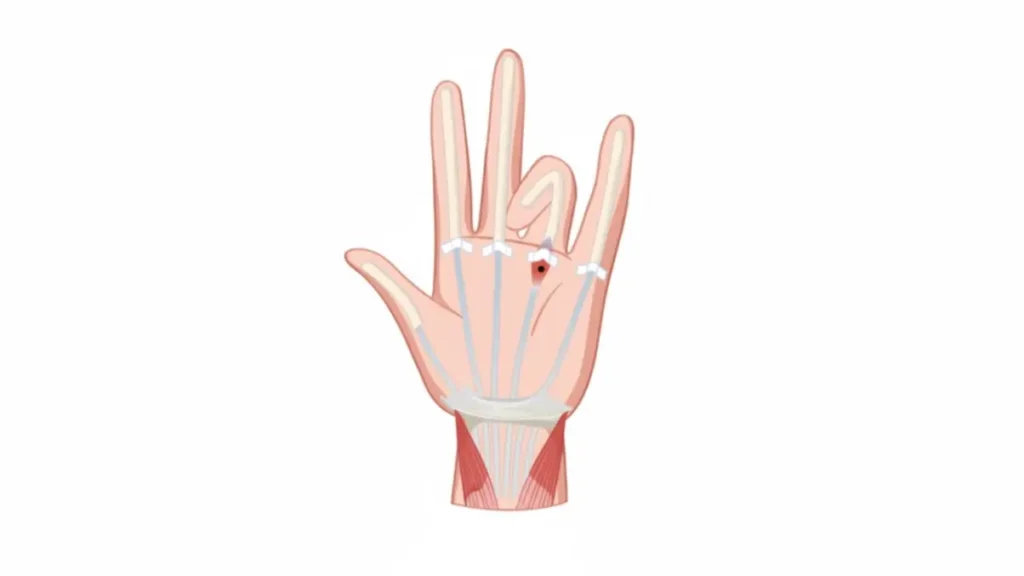
In contrast, trigger finger (stenosing tenosynovitis) is not typically an acute injury. It occurs when the flexor tendon, which bends your finger, becomes inflamed or develops a nodule. As this thickened tendon tries to pass through the sheath (the “tunnel” surrounding the tendon), it gets caught. This causes your finger or thumb to lock or “trigger” into a bent position, often requiring effort or your other hand to snap it straight.
How Can I Tell if I Have Mallet Finger or Trigger Finger?
Recognizing the early signs is crucial for effective management. If you are struggling to move smoothly and are noticing changes in your hand function, keep these key differences in mind:
Symptoms: Mallet Finger vs Trigger Finger
|
Feature
|
Mallet Finger
|
Trigger Finger
|
|---|---|---|
|
Primary Site
|
The distal (tip) joint
|
The base of the finger/palm
|
|
Mechanism
|
Acute injury (jammed finger)
|
Gradual inflammation (overuse)
|
|
Appearance
|
Tip droops downward
|
Finger locks in a bent position
|
|
Movement
|
Cannot straighten tip voluntarily
|
Snapping/popping sensation when moving
|
Causes and Risk Factors
Understanding why these conditions occur helps in both prevention and treatment.
- Mallet Finger Causes: This is almost always the result of a direct blow to the fingertip. Whether you are playing a sport in Dubai and jammed your pinky finger against a ball, or you suffered an impact during everyday activities, the trauma disrupts the extensor tendon.
- Trigger Finger Causes: This condition is often associated with repetitive gripping or strain. Occupations or hobbies that involve heavy tool use, musical instruments, or constant texting can increase risk. Furthermore, medical conditions such as diabetes and rheumatoid arthritis are well-known risk factors.
Diagnosing mallet finger and trigger finger
If you notice a left hand second finger issue or discomfort in any digit, a professional examination is required.
A hand specialist will perform a physical exam to observe the movement patterns. In cases of suspected mallet finger, mallet finger radiology (X-rays) is vital to rule out an avulsion fracture, where the tendon pulls a piece of bone away. For trigger finger, the diagnosis is usually clinical, based on the presence of tenderness at the A1 pulley and the characteristic locking sensation.

Treatment Options for Mallet Finger vs Trigger Finger
Mallet Finger Treatment
The primary goal is to keep the distal joint in a neutral, straight position to allow the tendon to heal.
- Mallet Finger Splint: Consistent use of a specialized splint is the gold standard of the mallet finger treatment protocol. This must be worn full-time for 6–8 weeks.
- Surgery: If the injury is severe, involves a large bone fragment, or the joint is misaligned, mallet finger surgery may be necessary to pin the joint.
Trigger Finger Treatment
- Conservative Care: This includes using a trigger finger splint at night, modifying activities to avoid repetitive gripping, and performing gentle trigger thumb exercises or finger stretches.
- Injections & Release: For persistent cases, steroid injections can reduce inflammation. If these fail, surgical trigger finger release is a highly effective, minimally invasive procedure that restores smooth gliding.
Discover the treatments I offer, the cases I’ve treated, and what my clients say about me through my official website: dubaihand.com
Recovery Time and Complications
- Mallet Finger Recovery Time: Healing can take several months. Even after the splint is removed, you will need to engage in guided mallet finger exercises to restore range of motion and strength. If left untreated, a frozen mallet or a permanent deformity, like the Mallet finger vs swan neck deformity, can develop, making the joint stiff and painful.
- Trigger Finger: If treated early, recovery is typically swift. However, ignoring the issue can lead to a permanently locked finger, which complicates everyday tasks.
When to See a Doctor
You should seek professional medical advice if:
- You are unable to straighten your finger after an injury.
- You notice persistent locking or snapping that interferes with your quality of life.
- You have visible swelling, bruising, or severe pain.
Why Choose Dr. Mohamed Ali?
If you are looking for expert care in Dubai, Dr. Mohamed Ali specializes in advanced hand and orthopedic surgery. With a focus on patient-centered outcomes, he provides:
- Precise Diagnosis: Using the latest technology to differentiate between complex hand conditions.
- Personalized Treatment: Whether you need a simple splint or advanced surgical intervention, he tailors the plan to your specific lifestyle.
- Expert Care: A commitment to minimally invasive techniques to reduce your recovery time and ensure your hand returns to function as quickly as possible.
Don’t let hand pain hold you back. If you are struggling with finger locking or a drooping tip, schedule a consultation with Dr. Mohamed Ali today to regain your range of motion.
FAQs about mallet finger vs trigger finger
Are trigger finger and mallet finger the same?
No. They are very different. Mallet finger is a tendon injury at the fingertip caused by trauma, whereas trigger finger is an inflammatory condition at the base of the finger caused by repetitive strain.
How do you tell if you have a mallet finger?
The most distinct sign is that the tip of your finger droops and you cannot straighten it on your own, even though you can usually push it straight with your other hand.
What is the most common cause of mallet finger?
The most common cause is a direct impact to the tip of an extended finger, such as catching a ball or jamming the finger during physical activity.
Will trigger finger go away by itself?
In very mild, early-stage cases, resting the hand may help. However, trigger finger often worsens without appropriate intervention, such as splinting or medical treatment.
Summary & Final Thoughts on mallet finger vs trigger finger
Distinguishing between mallet finger vs trigger finger is the crucial first step in your journey to recovery. Whether you are dealing with an acute injury requiring a splint or chronic locking that needs professional release, early intervention is key to restoring your hand’s function. By consulting with an expert like Dr. Mohamed Ali, you ensure that you receive the most accurate diagnosis and a treatment plan designed to get your fingers moving smoothly again.