

If you have ever felt your finger “catch” or “lock” in a bent position, or if you wake up with painful, stiff fingers that feel like they are stuck, you are not alone. This condition, known medically as stenosing tenosynovitis, is commonly referred to as trigger finger. While the name might sound alarming, it is a well-understood orthopedic condition that often responds beautifully to the right treatment.
In a bustling city like Dubai, where we rely on our hands for everything from high-tech work to daily lifestyle activities, finger pain shouldn’t be your new normal. If you are struggling with persistent symptoms, trigger finger surgery might be the key to reclaiming your mobility and quality of life.
Understanding Trigger Finger: Why It Happens
To understand the solution, we must first look at the problem. Your fingers and thumbs have “flexor tendons”—rope-like structures that connect your muscles to your bones. These tendons glide through a tunnel-like protective sleeve called a tendon sheath.
To keep the tendons close to the bone, your body uses bands of tissue called “pulleys.” The A1 pulley, located at the base of your finger where it meets the palm, is the most common site of trouble.
When this pulley becomes inflamed or thickened, the tendon can no longer glide smoothly. It may develop a small nodule that catches on the pulley, leading to the characteristic snapping, popping, or locking sensation.
Common Causes & Risk Factors
While the exact cause is sometimes unclear, several factors can increase your risk:
- Repetitive Motion: Jobs or hobbies involving frequent pinching, grasping, or vibrating tools.
- Systemic Conditions: Diabetes, rheumatoid arthritis, gout, and thyroid disease are strongly linked to the condition.
- Age: It is most common in individuals between 40 and 60 years old.
Symptoms You Should Not Ignore
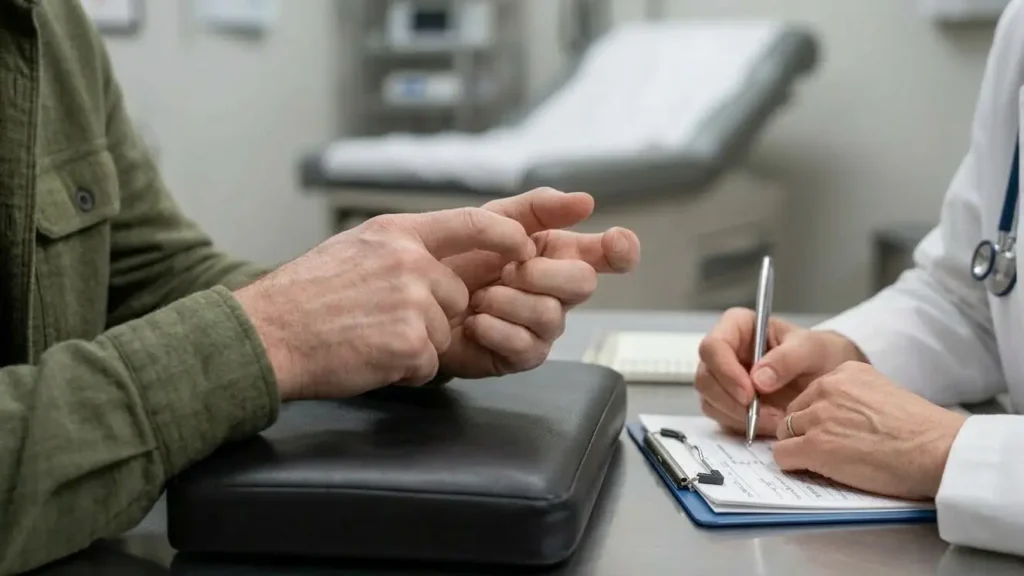
Recognizing the signs early can help you get the trigger finger treatment you need before the condition progresses to a locked state. Keep an eye out for:
- Catching or Snapping: A sensation that your finger is getting “stuck.”
- Pain and Stiffness: Often worse in the morning, gradually improving as you use your hand.
- Tender Lumps: A painful, pea-sized nodule at the base of your finger on the palm side.
- Locking: The finger becomes stuck in a bent position and requires your other hand to manually straighten it.
Read also about: How to Prevent Trigger Finger: Top Tips for Hand Health.
Non-Surgical Options: The First Step
Before jumping to an operation, it is standard practice to attempt conservative management. If your case is caught early, your orthopedic specialist may suggest:
- Rest and Activity Modification: Giving your tendons a break from the movements that irritate them.
- Trigger finger splint / Trigger thumb splint: Wearing a brace at night to keep the digit in a neutral position.
- Trigger finger exercises: Gentle stretching to improve flexibility.
- Anti-inflammatory Medication: NSAIDs to reduce localized swelling.
- Steroid Injections: A powerful way to reduce inflammation directly within the tendon sheath.
Considering Trigger Finger Surgery
When conservative methods fail to provide relief, or if your finger is locked and cannot be straightened, a trigger thumb operation or finger release surgery is highly recommended to prevent permanent joint stiffness.
What is the Procedure?
The goal of trigger finger surgery is to release the A1 pulley. By dividing this tight band of tissue, the surgeon creates more space, allowing the tendon to glide freely once again. This is typically an outpatient, minimally invasive procedure performed under local anesthesia.
What to Expect During Surgery
- Preparation: You may need to pause certain medications prior to the date. On the day, the area is numbed, and your arm may be positioned with a light tourniquet for precision.
- The Release: Whether using a small incision in the palm or a needle-based approach, the surgeon carefully releases the A1 pulley.
- Testing: In many cases, the surgeon will ask you to move your finger while still in the operating room to ensure the “catching” is gone.

Recovery and Long-Term Outlook
Recovery is usually swift, with many patients experiencing immediate relief from the “locking” sensation.
- Early Movement: We encourage light movement almost immediately to prevent stiffness.
- Return to Work: Clerical workers often return the next day, while those in manual labor may need 3–4 weeks for full tissue healing.
- Physical Therapy: If stiffness persists, trigger thumb physiotherapy and guided exercises are essential for a full recovery.
Are you tired of living with finger pain?
Expert care is closer than you think. Dr. Mohamed Ali specializes in advanced hand surgery and can provide you with a comprehensive assessment to determine if surgical intervention is right for you. Schedule your consultation with Dr. Mohamed Ali and take the first step toward pain-free movement.
FAQs about trigger finger surgery
How painful is surgery for a trigger finger?
The procedure is performed under local anesthesia, so you will not feel pain during the surgery itself. Afterward, you may experience mild soreness or swelling in the palm, which is easily managed with elevation and medication.
What will happen if a trigger finger is not treated?
If left untreated, the inflammation can worsen, leading to persistent locking or even permanent joint contracture (stiffness), where the finger becomes impossible to straighten, significantly impacting your hand function.
Can a trigger finger be fixed with surgery?
Yes. Trigger finger surgery has a very high success rate (often reported between 90-100%). It is a definitive solution that releases the mechanical obstruction, allowing for smooth tendon gliding.
What kind of surgery is done for trigger finger?
The procedure is known as “trigger finger release.” It involves the division of the A1 pulley, either through a small open incision or a percutaneous (needle-based) approach.
Summary & Final Thoughts on Trigger Finger Surgery
Trigger finger can be a frustrating and painful hurdle in your daily life, but it does not have to be permanent. With accurate diagnosis and modern surgical techniques, relief is highly achievable. Don’t wait for your condition to cause permanent stiffness—take action to restore your hand’s function today.
If you are looking for an expert in trigger finger surgery in Dubai, Dr. Mohamed Ali offers personalized, high-quality care tailored to your specific needs. From thorough diagnosis to compassionate post-operative support, we are here to help you get back to what you love doing most.
Ready for relief?
Contact our clinic today to book your appointment with Dr. Mohamed Ali.
References
- American Academy of Orthopaedic Surgeons (AAOS): Trigger Finger
- Cleveland Clinic: Trigger Finger Overview
- WebMD: Trigger Finger Surgery Expectations